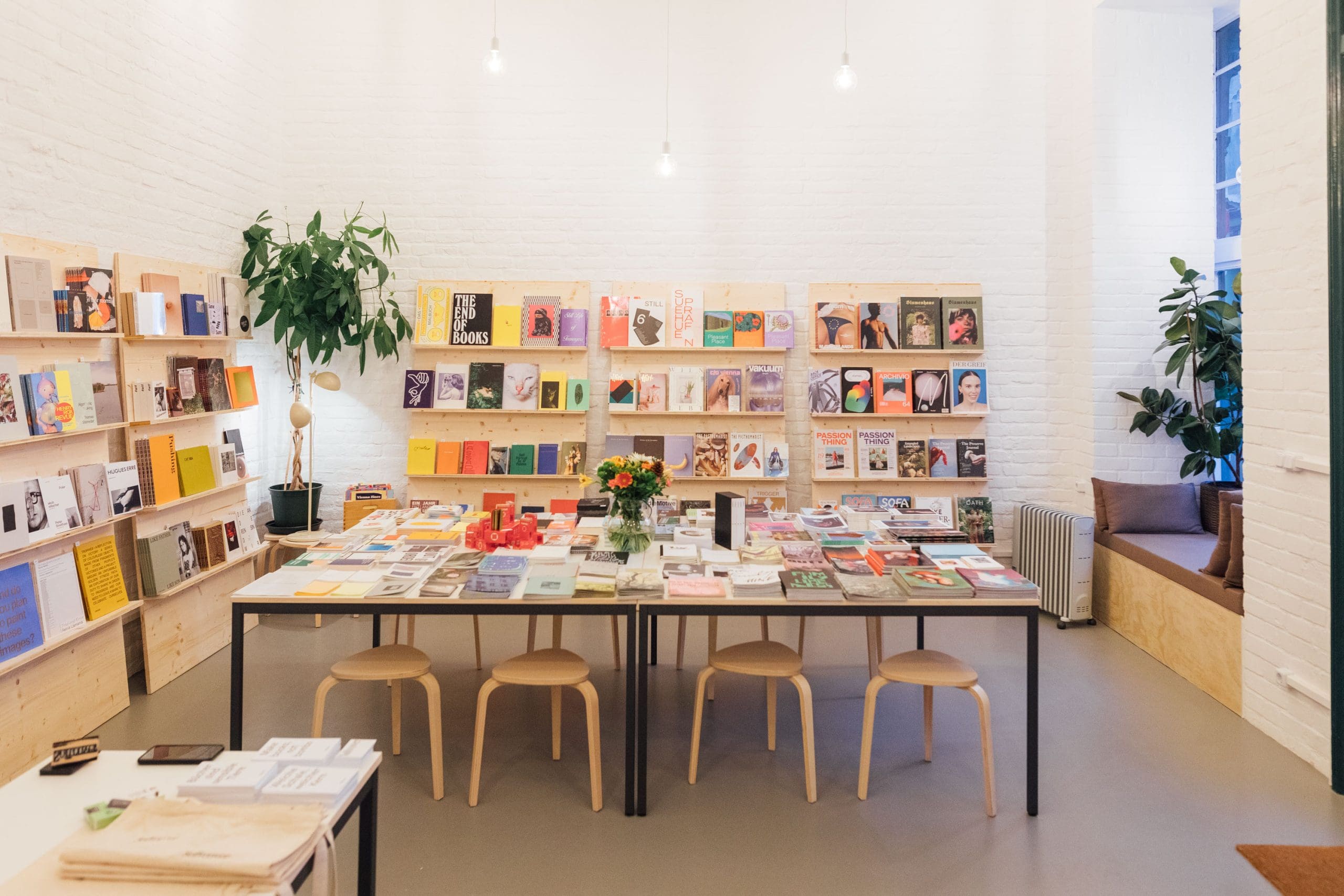
How did this place come about and what made it different from the start?
Softcover came to be very organically over the last couple of years. Through two other projects I co-founded — a photo magazine called Auslöser (“Trigger”) and a photo festival in Vienna called OFF GRID — we already created a small community for books and magazines. The idea of creating a shop for these special independently published titles grew more and more. I’m actually a graphic designer and photographer and worked freelance for clients for many years. So in December 2023 I opened Softcover, a speciality shop for photo books, art books, independent magazines, and small print. Such a space was really missing in Vienna for a long time.

What part of the day, space, or creative process do those who work here enjoy the most?
Softcover as a physical space is very important. You have to touch, smell, and feel the books and magazines. It’s a very beautiful, very bright, and creative space. It’s very inspiring to be surrounded by amazing and beautiful print publications from around the world every day. And the work never stops. New books and magazines are published all the time; the big challenge is to curate them really carefully.

If someone is coming in for the first time, what should they not miss?
We have many unique books and magazines in stock. Some of them are handmade, some are limited artist prints, some are bigger magazines, and also collector’s editions. If someone is coming in for the first time, they should definitely not miss some of the very special books and magazines we have. They could be art objects. For example, Until Death Do Us Part by Thomas Sauvin — it’s a photo book about Chinese weddings, where people smoke and play smoking games. The bride lights cigarettes for all the wedding guests, and the more cigarettes, the more luck it should bring to the wedding couple. The book is packaged inside a real Chinese cigarette pack. It’s very special and one of our bestsellers.

What has been an interesting challenge that has made you rethink something about the project?
At Softcover we also host many special events, such as artist talks, book presentations, magazine releases, and workshops. In the beginning I really underestimated the work that goes into the planning of such events. It takes so much time and careful planning. So it really was a big challenge to figure out how to set up the space to be a beautiful bookshop during the day and to turn it into an event space during the night.

What influence, idea, or reference continues to shape the way you work today?
I think the idea of having a community is so important. Many people who produce these publications also want to buy these publications. Local communities really matter, and it’s important to support your local artists and local spaces. The more niche, the better. We don’t need giant companies and mass-produced mainstream content; we need more uniqueness and weirdness in our lives.

What place, project, or person has inspired you recently and why?
Recently I’ve been really inspired by the Hungarian photographer Andi Galdi Vinko. She made an amazing photo book about motherhood called Sorry I Gave Birth I Disappeared But Now I’m Back. It’s so raw, direct, and human. Also very inspiring is the book about Henry Rox, titled Henry Rox Revue. Fotografie 1935–1955; it’s all about his fruit and vegetable figures. It’s funny and creepy at the same time.

If your space could invite someone to collaborate for a day, who would it be and what would you do together?
I would love to invite Sofia Coppola and Yorgos Lanthimos. I really hope it works out someday for an event together, with book signings and creative workshops.

Is there an object, corner, or detail of the place that has a story that few people know?
Before opening Softcover, there was a very legendary music and night club for 30 years in the same space, called Tagasyl (“Day Asylum”) and in the basement Nachtasyl (“Night Asylum”). It was really legendary and it’s very sad that they had to close. And of course, after 30 years the space was really run down. We did a big renovation. There were holes in the floor, there was no proper electricity, no proper heating or proper water system. The ceiling of the space was brown and yellow from all the nicotine. The ceiling alone we had to repaint six times.

If this project were a city, a book, or a record, which would it be and why?
It would maybe be the film Perfect Days by Wim Wenders. It’s quiet, slow-moving, and carefully crafted.
Answers by Sebastian Gansrigler, Founder and Owner of Softcover.

Speciality shop for photo books, art books, indie magazines & zines
Vienna, Austria