What pieces or projects have you been working on lately?
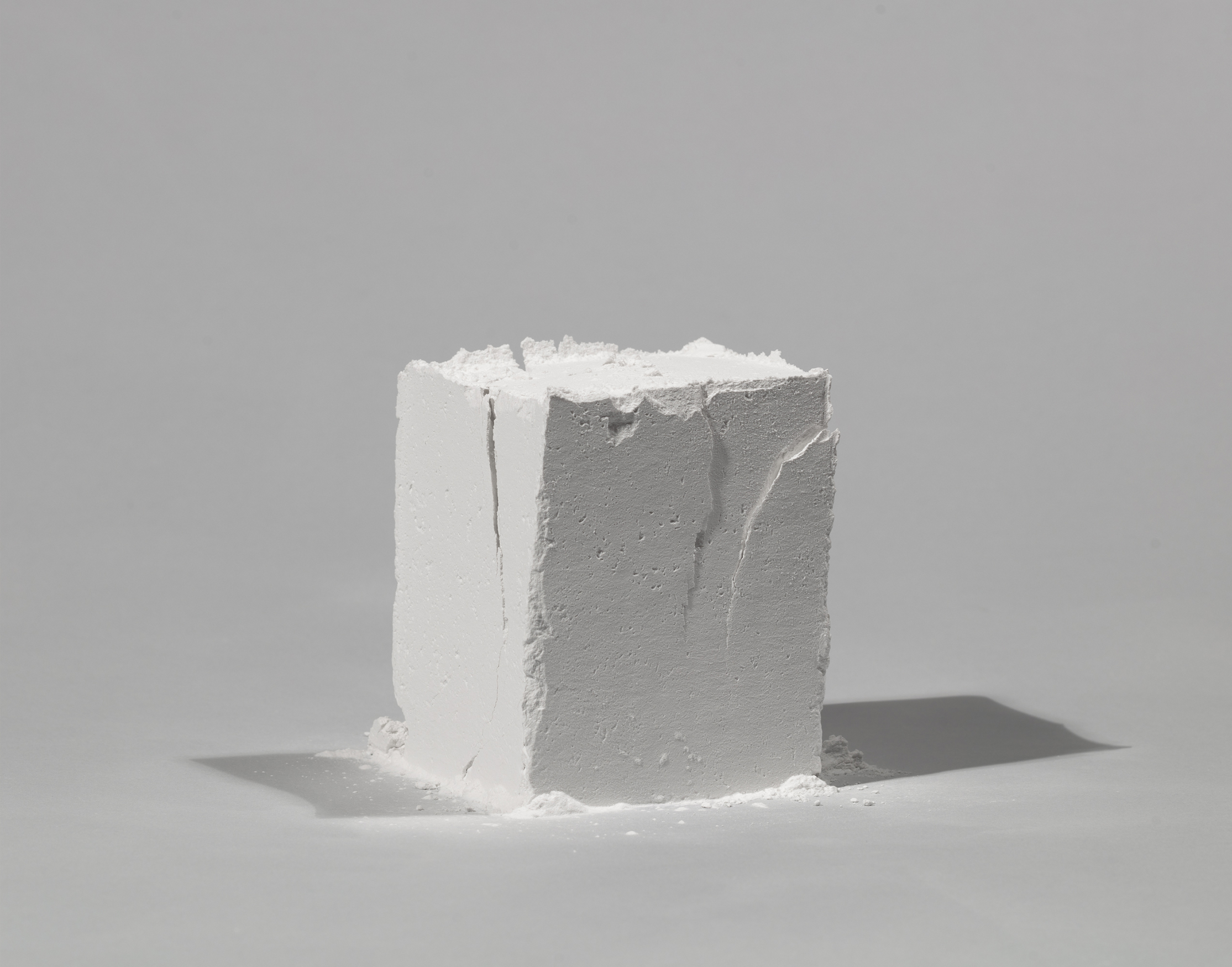
I would say that my recent work is a dialogue between photography and sculptural practice. This series is not far removed from those interests, but unlike some of my other series, it is also informed by a painterly dimension.

What did you learn (or unlearn) while working on them?
In this series, I shed many preconceived notions about what a work should or shouldn't be. I generally make very few decisions between the conception of a piece and its final execution. Much of my work has strict and efficient formulations, but in this case, there was a certain lightness and a more relaxed approach that stemmed from an intuitive dialogue with the material characteristics of the objects in terms of form, color, weight, or density, and also a certain awareness of how that could be translated into visual terms. There was, yes, a sculptural concern, but also a clear awareness that in the end, they would become photographs. I thoroughly enjoyed the process in terms of interacting with the materials and also the open dialogue with what those materials were telling me.

What words, ideas or emotions were going through your head?
There were several ideas that served as the coordinates for this work. On one hand, there was the sculptural event itself; on the other, certain codes of visual representation belonging to commercial photography; and finally, an approach I would venture to call painterly. I've always thought this series occupies an ambiguous space between artistic endeavor and catalog production. I'm interested in images that are self-aware of their own production. The shadows, for example, betray studio lighting and a type of still-life production that proliferated in the 1970s. The series plays with established notions of photographic representation, disregarding the context to which they are supposed to belong. The photographs are shot on analog negative film in a 4x5-inch format, which is large. Here, there is a conflicting use of visual languages—art, editorial, commercial—which, in my opinion, produces variations in our attention. My aim was to create a series of images devoid of anecdote or narrative and without any significant intention beyond creating a space for heightened observation.

Were there any conversations, movies, music, or books that made their way into that work?
Yes. I mentioned the pictorial dimension in these images: the truth is that they are influenced by the painting of Giorgio Morandi.

What is your favorite coffee shop and why do you like going there?
I like to make my own coffee at home, but I buy it from a coffee shop next to the Eugenia metro station in Mexico City. It's easy to miss and doesn't pretend to be anything more than roasting excellent coffee. It's called Maneken.

If your life were a movie this month, what would it be called and who would write the soundtrack?
The soundtrack wouldn't need to be made because it already exists, and I wouldn't use it to provide music for this month but for my entire life:Cape Canaveral" by Conor Oberst. The film's title would be "Trip to the Moon."

Which studios, laboratories, or workshops have you collaborated with recently or would you like to collaborate with in the future?
I recently completed a site-specific project in Austin, Texas with Colab- Projects and the question is relevant because I put some of what I learned from this project we've been discussing into practice while collaborating with them. The piece I made was a kinetic sculpture using household objects, and it was very helpful to understand it as if it were a drawing.

Recommend one or more artists you follow who inspire you, and tell us what you like most about their work or their way of working.
I recommend you check out the work of Sandra Blow. I always find the work of young artists fascinating, especially those whose creative process is completely different from mine. Her work is powerful and has a raw energy that can't be replicated.

His work explores the relationship between objects, space, and the elusive nature of images.