What pieces or projects have you been working on lately?
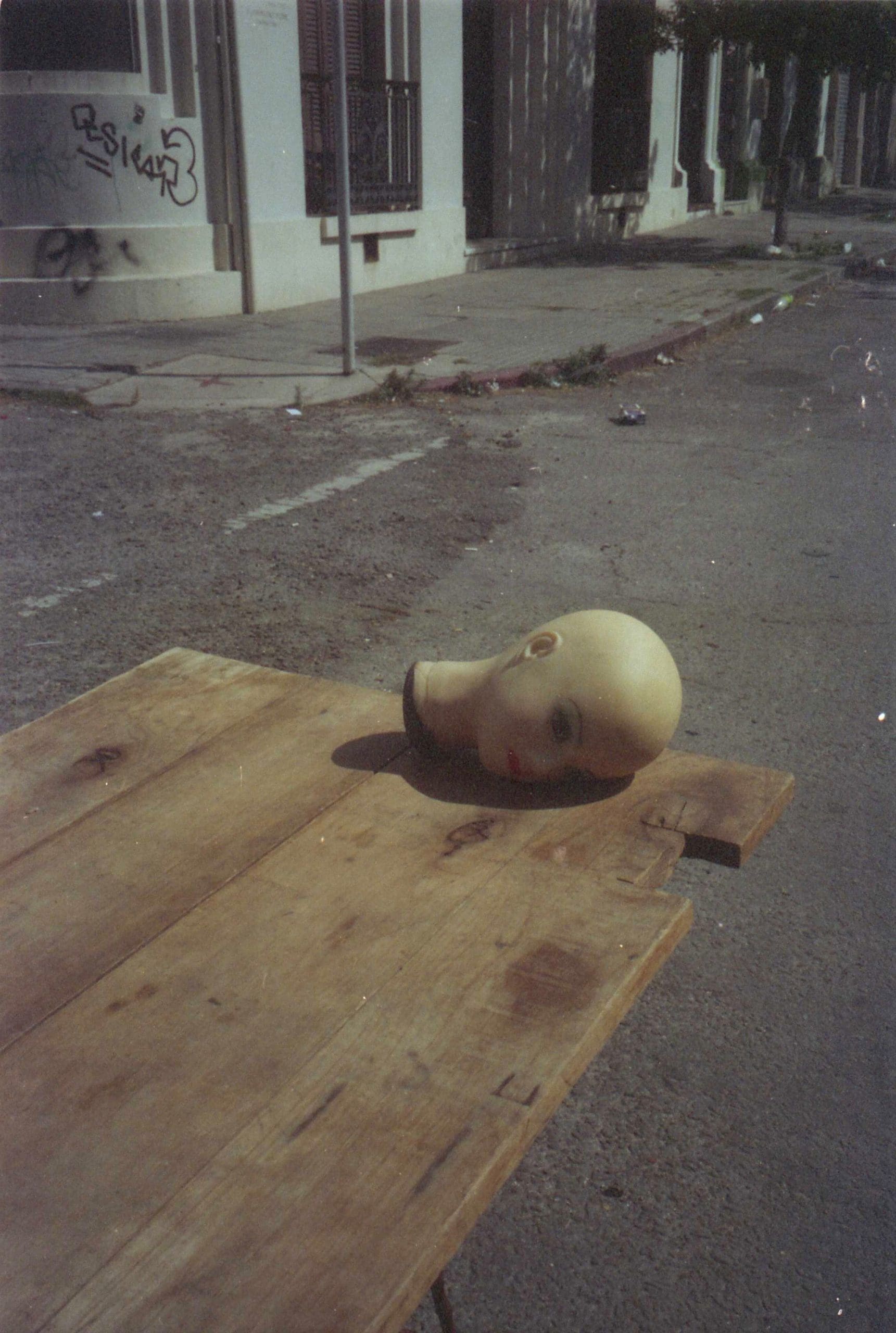
I always find it difficult to answer this kind of question because my relationship with photography is something like a permanent parallel gaze. I try to carry a camera with me to document my walks, the rhythms of the places I move through, the colors of everyday life, and the gestures of the ordinary that catch my attention. Added to this is the “discovery” of how everything expresses itself unpredictably when shooting with expired film.
Sometimes I become obsessed with certain subjects—for example, boarding houses in Montevideo or seedy bars—and my gaze sharpens in that direction, though not with a predetermined intention of “production,” but rather as a way of moving through those places. Lately, the place I inhabit most permanently is Montevideo, where I live.

What did you learn (or unlearn) while working on them?
Learning and unlearning in photography, I think, are constant. Always having a camera at hand is a way for me to restructure my gaze, to search for alternatives to what I see. And shooting analog forces me to let go of urgency and accept error, waiting, and lack of control. All necessary exercises, at least for my personal configuration.

What words, ideas or emotions were going through your head?
Repetition, routine, and melancholy are ideas that I tend to romanticize a little and that always circle my mind when I’m looking. Lately—perhaps because the world seems to be pushing in that direction—decadence and apocalypse have also become more present.

Were there any conversations, movies, music, or books that made their way into that work?
I’ve been a fan of films for as long as I can remember, and I think they’ve been the main school of my gaze. My visual record is probably the result of a rather strange mix: a childhood and adolescence spent in front of the television—watching movies on cable channels like I-Sat or TCM, to which I owe my visual education. That experience makes my walks through the grime and concrete decay feel a bit magical and makes me want to capture them.

What's been the most difficult thing you've faced recently in your creative process?
The idea of “work” or of a “process” has always been somewhat conflictive for me. I learned photography as a hobby, alongside my father, who is a self-taught and passionate photographer; in other words, I don’t have formal artistic training per se. Perhaps because of that, I find it difficult to think of my photos and my methods as creative processes or as a body of work. Rather than paralyzing me, that conflict energizes my relationship with photography and with my creative practices in general, and it keeps me moving.

What is your favorite restaurant and what do you recommend we order?
This might sound strange, but there’s a restaurant in my neighborhood called El Fogón: a very classic place, the kind frequented by older gentlemen, with white tablecloths and waiters wearing vests and mustaches. Of course, the specialty is meat—since that’s Uruguay’s specialty—and their grill is certainly worthwhile for anyone who includes it in their diet. Still, what I really want to recommend is the mashed potatoes. They’re perfect.

If your life were a movie this month, what would it be called and who would write the soundtrack?
January was my vacation month: a domestic, monastic, slow, and pleasurable odyssey, almost like a black-and-white film by Béla Tarr's (perhaps a small homage). It could be titled 31 , or something equally understated, with a soundtrack that includes Black Sabbath—just to indulge myself, even though I doubt Tarr would agree with that last part.

Recommend one or more artists you follow who inspire you, and tell us what you like most about their work or their way of working.
Kubrick and Tarkovski are references that are always worth returning to; I would undoubtedly recommend watching 2001: A Space Odyssey or Stalker. The poetic exercise proposed by artists like them pushes me to look at the world—and at myself—with different eyes. It’s a kind of spiritual exercise that I find deeply inspiring, even when it moves us in ways that are difficult to process. Along those lines, I’d also like to make a more current and somewhat controversial recommendation. I really liked the Oscar-nominated film Sirat (Laxe, 2025), even despite the criticism its director received—or perhaps precisely because of the controversy his perspective generated. Whether we like it or not, the experience of watching the film captures that sense of poetic upheaval that interests me, and that is precisely what I would recommend.

Philosophy teacher and self-taught photographer. My practice unfolds as a way of moving through the everyday, in search of reorganizing my sensory experience.