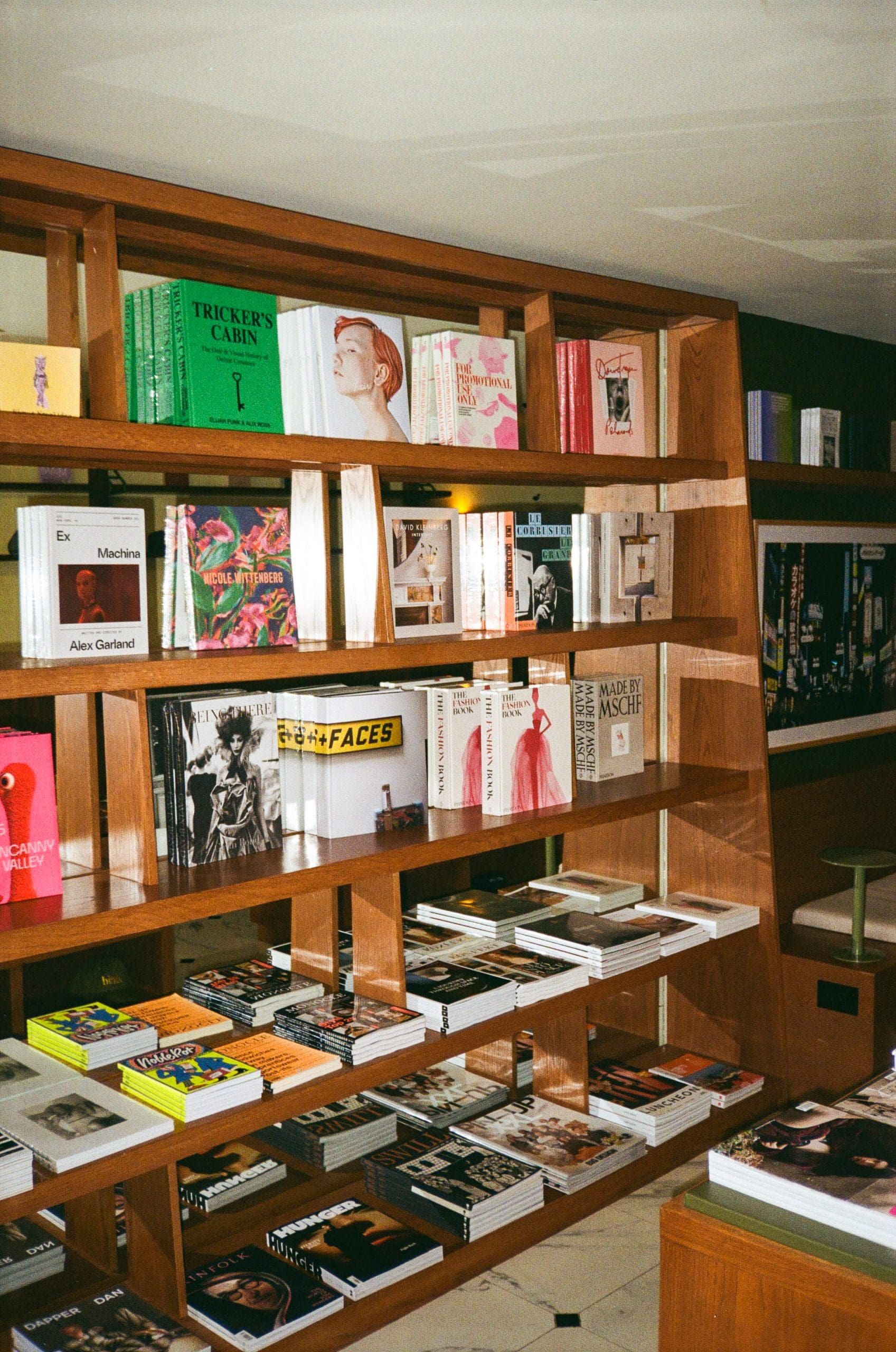
How did this place come about and what made it different from the start?
This space was born from an idea we envisioned for years. I wanted to combine two of my passions: enjoying something delicious, unique, and well-made while reading or listening to music. I've always felt a special connection to print media and to "informal" reading—the kind you enjoy without screens and without rushing. Inkultur was born with that intention: to create a comfortable and unpretentious place where you can spend time with someone special or simply with yourself.

What part of the day, space, or creative process do those who work here enjoy the most?
I feel there are two very distinct times of day when people come here. In the mornings, people come looking for peace and quiet; the atmosphere is calmer, ideal for reading, writing, or simply relaxing. In the afternoon, the space transforms: there's more activity, conversations, laughter, and music. The day's playlist plays on the sound system—a little louder, but without interrupting the conversations. There's always someone browsing books or magazines, trying something new from the bar, or simply enjoying the moment. Also, one of the parts of the creative process that we enjoy most is connecting with people, sharing, and exchanging opinions, ideas, and pleasant moments. That's the true magic of Inkultur: the transformation of the space and the human connection—and connection with oneself—that arises naturally.

If someone is coming in for the first time, what should they not miss?
Definitely try a drink you haven't had before. We have different matcha options with fresh fruit, coconut water, or tonic water, and our best seller: the Einspänner Matcha, a matcha with a sweet and savory foam. We also have both conventional and more experimental coffees, mocktails (like one made with Calpis that tastes like lemon pie), and kombucha for those looking for something healthier. And, of course, it's worth exploring the publications: we're always updating our selection, with limited copies of each title.

What has been an interesting challenge that has made you rethink something about the project?
The biggest challenge is that we initially planned to be a matcha bar, but there's currently a global matcha crisis, and that has definitely been our main challenge. It's also been a challenge to communicate to consumers that, in the magazines we offer, "seasonality" isn't as relevant as in conventional publications. Each title features unique collaborations and content with very high intellectual value, created by incredibly interesting people. It's not about what's new or old, but about the quality and the intention behind each publication.

What influence, idea, or reference continues to shape the way you work today?
We are still driven by the same idea: to create a place where things resonate. Where a drink, a magazine, a book, or a song can awaken something. Inkultur continues to be guided by intuition, beauty, and the desire to keep print culture alive.

What place, project, or person has inspired you recently and why?
We're inspired by projects that understand paper and culture as living experiences. MagCulture in London, for its editorial vision and respect for the printed format; Climax and Isabella Burley, for how they blend art, fashion, and contemporary thought without losing their authenticity; and OFR Paris, for its energy that straddles bookstore, gallery, and meeting place. We're also influenced by many shops in Berlin—of diverse kinds—where music is an integral part of the atmosphere, where sound is part of the visual and sensory language of the space. We like that freedom, that mix of rigor and chaos, of contemplation and movement. Inkultur is somewhere in between: between the silence of paper and the pulse of a song.

If your space could invite someone to collaborate for a day, who would it be and what would you do together?
We would love to collaborate with a film distributor like A24 or a similar one. We envision creating a drink inspired by one of their films, something that translates its aesthetic and atmosphere into flavor—a kind of “cinema for drinking.” We would also like to organize talks with directors, writers, and creators, promote art-house cinema, and build bridges between the screen, the page, and the in-person experience. Furthermore, we are deeply inspired by creative women: directors, writers, designers, and editors. We believe their perspective transforms contemporary culture, and it would be a dream to foster collaborations that amplify that voice through Inkultur.

Is there an object, corner or detail of the place that has a story that few people know?
The bathroom faucet has a story few would imagine. It became an obsession: I spent hours browsing eBay auctions and using rabbit holes in plumbing websites, searching for the right one. Suddenly, all faucets seemed soulless—too new, too polished, lacking history. Finding the right one was almost a curatorial act. There's also the Transparent Brutalist speaker, which isn't just an object but an experience. It sounds incredible, but it also engages with the space: it's as visual as it is auditory, a midpoint between sculpture and technology. These are details that might go unnoticed, but for us, they're an essential part of what makes Inkultur feel unique.

If this project were a city, a book, or a record, which would it be and why?
Berlin is, forever, my source of inspiration. I have a magnetic pull toward that city; every time I return, I rediscover a different part of myself. It's the place that transformed my perspective: it taught me to appreciate imperfection, the beauty of ugliness, intentional chaos. A bit like the spirit of John Waters, but translated into streets, sounds, and real people. Everything I experienced there seeped into my understanding of aesthetics and the soul of things; that's why, in a way, every project I undertake is a love letter to that city.
Answers by Andrea Garza Ruiz, creative director of Inkultur.

Curated Press and Yummy Sips
Río Colorado 206, Del Valle
San Pedro Garza García, Nuevo León
Mexico