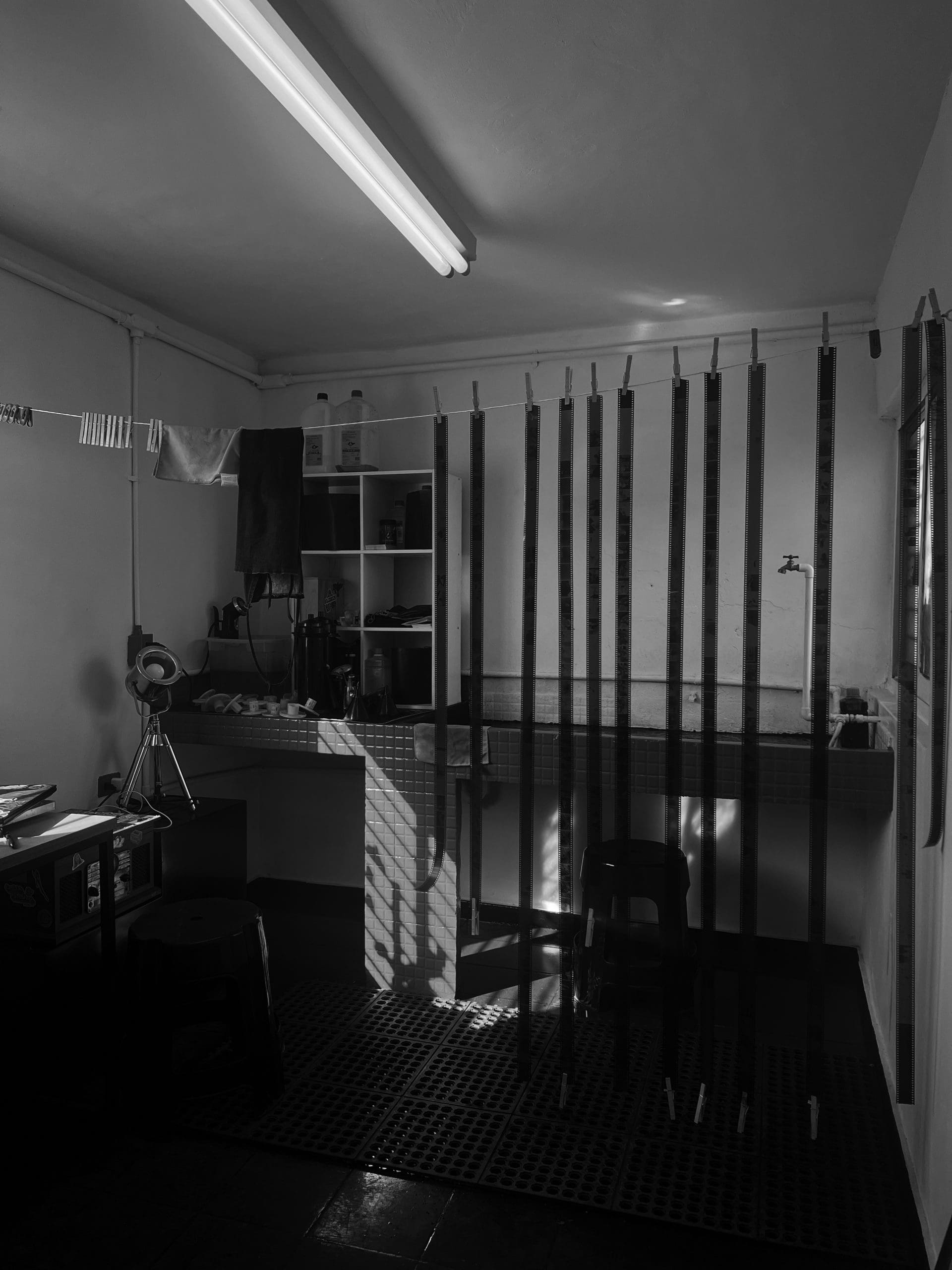
How did this place come about and what made it different from the start?
Andres Rojo: When I started taking photos I chose analog photography. I was living in LA in 2019 and at the end of that year I returned to Culiacán, and when I wanted to develop film I couldn't find anywhere. At the same time I met Natanael through Instagram, a friend who taught me how to develop. Over time, I started developing and posting my photos on social media, and people would ask where I developed them, and I would tell them I did it myself. Natanel and I came up with the idea of opening a lab.


What part of the day, space, or creative process do those who work here enjoy the most?
Andres Rojo: I really enjoy scanning or spooling film. It kind of relieves my stress. Also, when I see people post their photos, it means they liked how they took them, the memories, the moments they captured. On the other hand, I also see the work we did and how well everything turned out.
Kareli Álvarez: It's a big responsibility, but revealing what could be a beautiful memory, a memory of someone's work, or their everyday life, seems to me to be the most beautiful part of our job. The fact that they can get their photos both digitally and on film, and thus continue promoting analog photography, is a really cool thing.

If someone is coming in for the first time, what should they not miss?
The space where the lab is located, being a creative studio, seems interesting in itself for people who come to explore the place, since Algobien Lab is currently located within Gnisis, a video and music production studio. I think you can find a bit of the personality of each of the people who work there, and I think that's the most beautiful part.
What has been an interesting challenge that has made you rethink something about the project?
The city itself seems to somewhat ignore the efforts of analog photography, and that in some ways makes me personally rethink the need for it over digital photography. Although once I have someone's film in my hands, or even my own, I'm certain that the entire process is worth it.


What influence, idea, or reference continues to shape the way you work today?
We want to promote culture itself—photography, video, music. Algobien Lab is just one part of a project that inspires support for many artists from different fields.
What place, project, or person has inspired you recently and why?
I don't think I could name a specific person. The people who inspire me most have been my friends, from our conversations, the photos they show me, the exhibitions we attend, etc.
If your space could invite someone to collaborate for a day, who would it be and what would you do together?
It would be Graciela Iturbide and talk about photography, life and developing.

Is there an object, corner or detail of the place that has a story that few people know?
There's a wall inside the lab that has signatures or writings from friends or people who've been to the studio, as well as books and objects belonging to us. I really like the stickers; in a way, it's like seeing what we've built as coworkers and as friends.
If this project were a city, a book, or a record, which would it be and why?
If it were a city, it would be Culiacán. I think most people are very proud of their homeland, and I've seen many photos from great photographers who are passionate about the landscape, architecture, history, art projects, photoshoots, and more. There's so much talent in our city, and Algobien Lab wouldn't exist without them. That inspires us to continue growing, to see their desire to move forward.
Answers by Andres Rojo, co-founder of Algobien Lab.

Developing and digitizing rolls
General Juan José Ríos 875, Jorge Almada
Culiacán, Sinaloa, México