How did this place come about and what made it different from the start?
The restaurant was born from an idea my cousin Daniela and I had: to create a place that captured the essence of our grandmother's house, but with a modern twist, moving away from minimalism and embracing color and texture. It was a long process: it took us over a year to find the perfect location, and along the way, we met chef Xarem Guzmán, who was just looking for the right place to develop his ideas; his kitchen is the essential part of the project. Everything happened very organically, starting with friendships and a very genuine love for food and service, until little by little more people joined and Alboroto eventually took shape as a family.

What part of the day, space, or creative process do those who work here enjoy the most?
I think what we enjoy most is how the space and the food speak the same language. From the moment you arrive, the place feels like a warm embrace: the large windows, the colors, the booths, the music, the second floor with its fireplace… everything is designed to make you want to stay and forget about the outside world, like being at your grandmother's house but with a contemporary touch. And something really special is seeing our own team try the menu; they are our most demanding customers, so when they connect with what we do, we know we're on the right track.

If someone is coming in for the first time, what should they not miss?
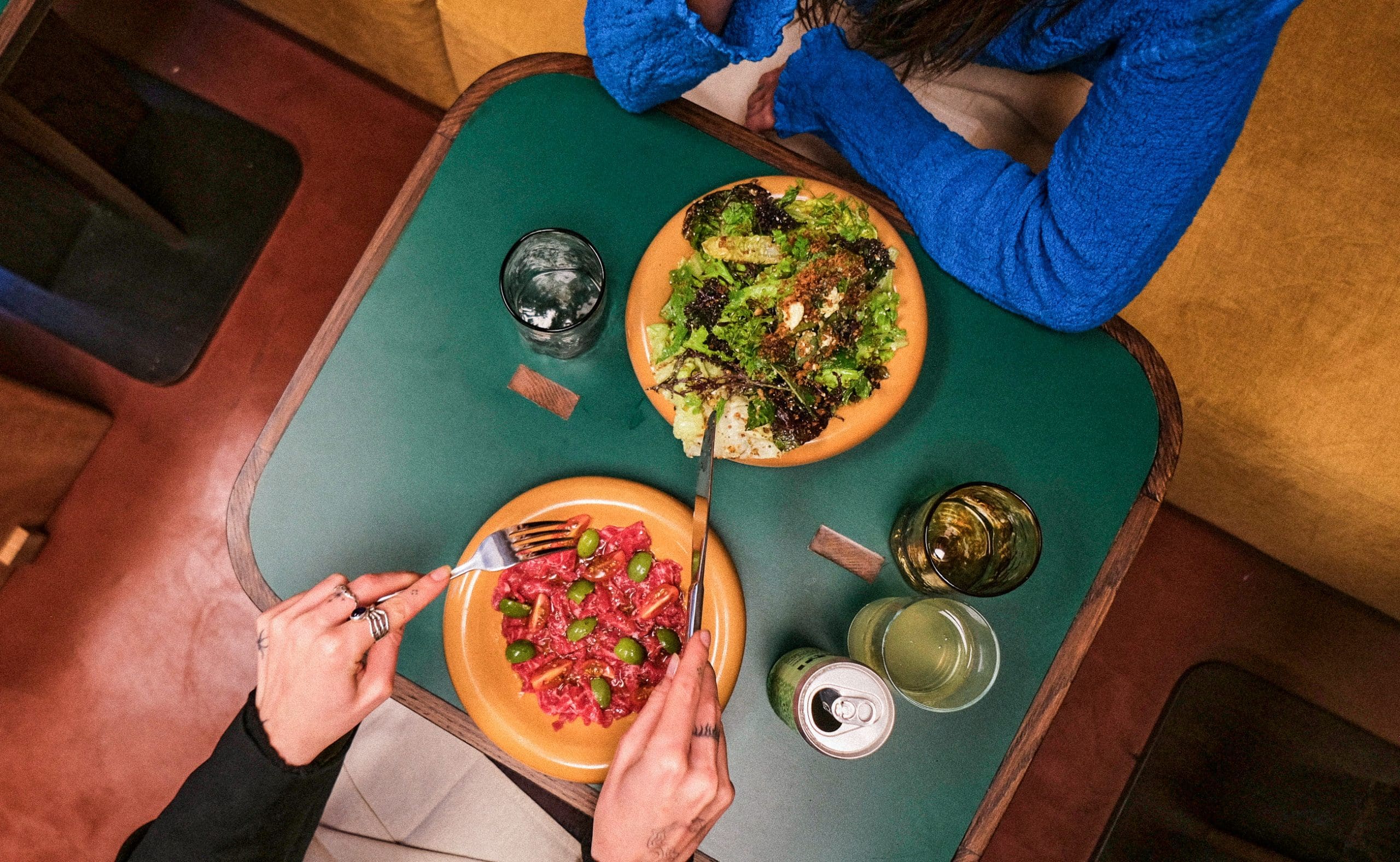
You can't miss the Grandma's Gimlet, the sliced wagyu with hazelnut butter and the grape salad with cucumber and cashew nuts are just a couple of examples. But beyond any specific dish, something we always emphasize is not to miss the experience of letting your server guide you; the entire team tastes, understands, and trusts what is served, and that makes all the difference.
What has been an interesting challenge that has made you rethink something about the project?
The restaurant industry is very complex, constantly changing, and unpredictable, which in itself presents a constant challenge. These days, there's a lot of competition, and new places are opening all the time, so going from being a "novelty" to something more established happens very quickly. Ultimately, the challenge lies in adapting, in finding a formula that resonates and stays in people's minds.

What influence, idea, or reference continues to shape the way you work today?
For us, the female presence is fundamental; it's the foundation of everything we do and is felt in every corner of Alboroto: in the food, the aromas, the colors, and the details. We're also guided by the principles of hospitality, that idea of truly making everyone who sits down at the table feel welcome. Ultimately, we like to think of the project as a place that aims to create a lively atmosphere at the tables: a place where people enjoy themselves, share, and let themselves be carried away by the abundance of food, drinks, and everything that's happening around them.

What place, project, or person has inspired you recently and why?
We're incredibly inspired by the Alboroto team, the family we've created here. Every single person teaches you something new every day, and that's what keeps the project alive. We're also inspired by all those people who take the plunge and start their own businesses and build something of their own.
If your space could invite someone to collaborate for a day, who would it be and what would you do together?
If this were a magic lamp, we'd love to invite Fergus Henderson from St. John, or Nick Curtola from Four Horsemen. Although our cuisines don't have much in common, we feel that they are among those people who truly enjoy what they do and every moment at the table.

Is there an object, corner or detail of the place that has a story that few people know?
Many of the details of the place were made by friends like RIO, GaxiolaArquitectos and COMCOM, and that gives it a very special value. There are also many things we found in La Lagunilla, among antiques and trinkets that bring the space to life. And a very personal touch is the ex-voto we had made of the three of us, which is also part of the history of the place.

If this project were a city, a book, or a record, which would it be and why?
The album Saâda Bonaire, one of the favorite albums. Made by women, it's very groovy, funky, and fun. It really represents boisterous femininity, especially the song “More Women”.
Answers by Daniela Verdes (founding partner), Xarem Guzman (executive chef) and Natalia Quintero (founding partner) of Alboroto.
