
What pieces or projects have you been working on lately?
In recent months, my practice has shifted toward a slower, more mindful relationship with photography. I’ve focused on developing and enlarging my negatives, creating contact sheets, and practicing close observation of my photographs, trying to understand them beyond the moment they were taken.
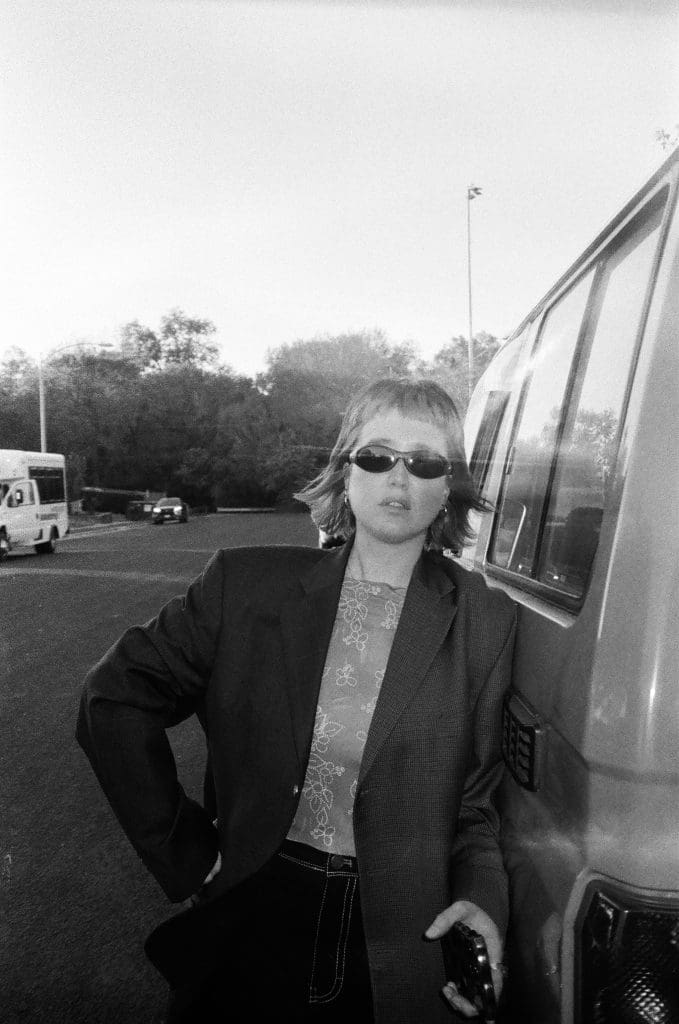
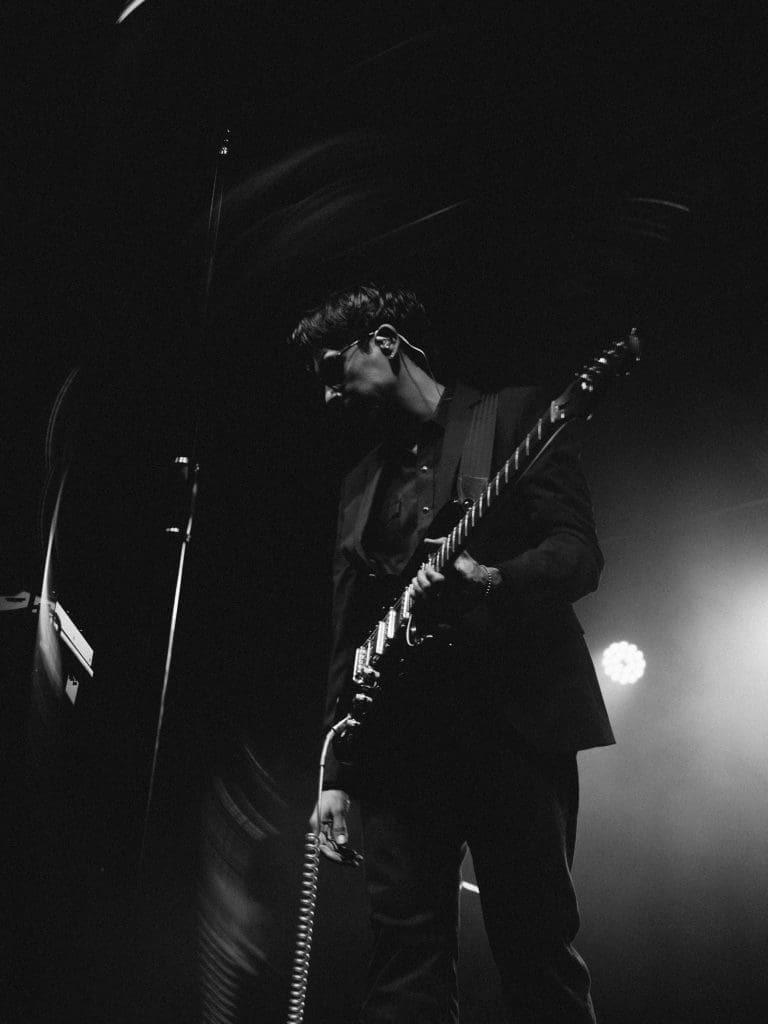
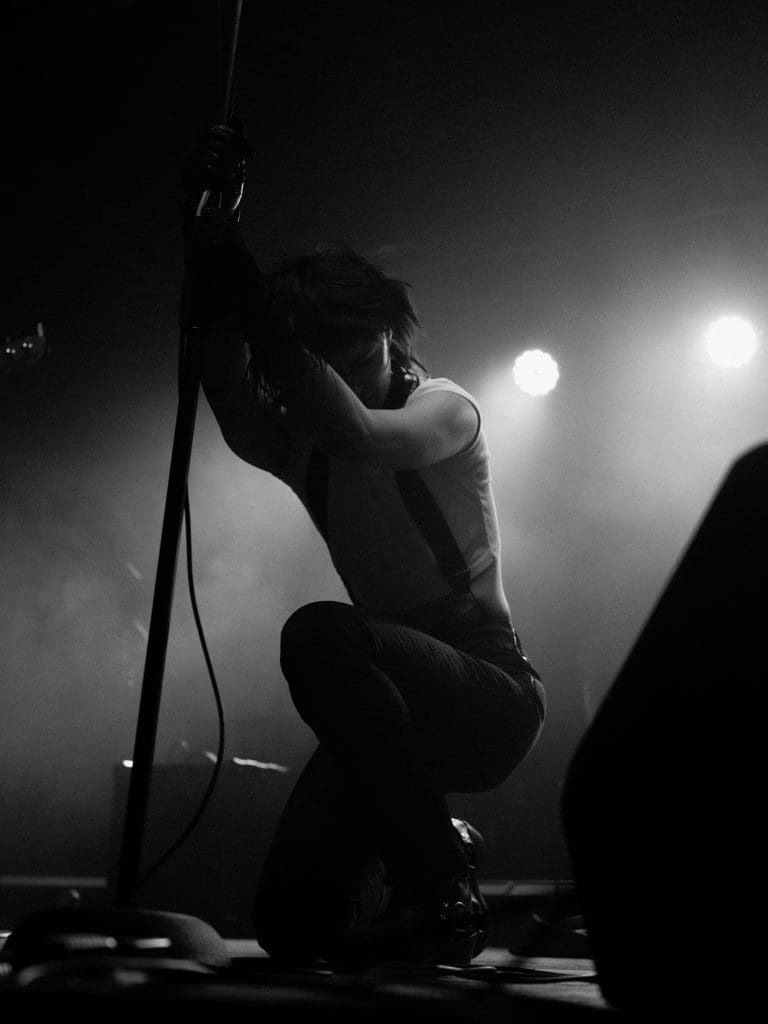
My process often begins at a concert or on the street, in the act of walking and observing. I spend hours photographing people in different spaces, seeing the shot not as an end, but as the starting point of a broader process. It was through a recent project designing covers for several singles and an album that I began to question my relationship with light more deeply and its role within a cinematic narrative. This curiosity led me to rethink the idea of authorship and to understand that a photograph doesn’t end at the moment of capture, but in the subsequent dialogue with the negative.
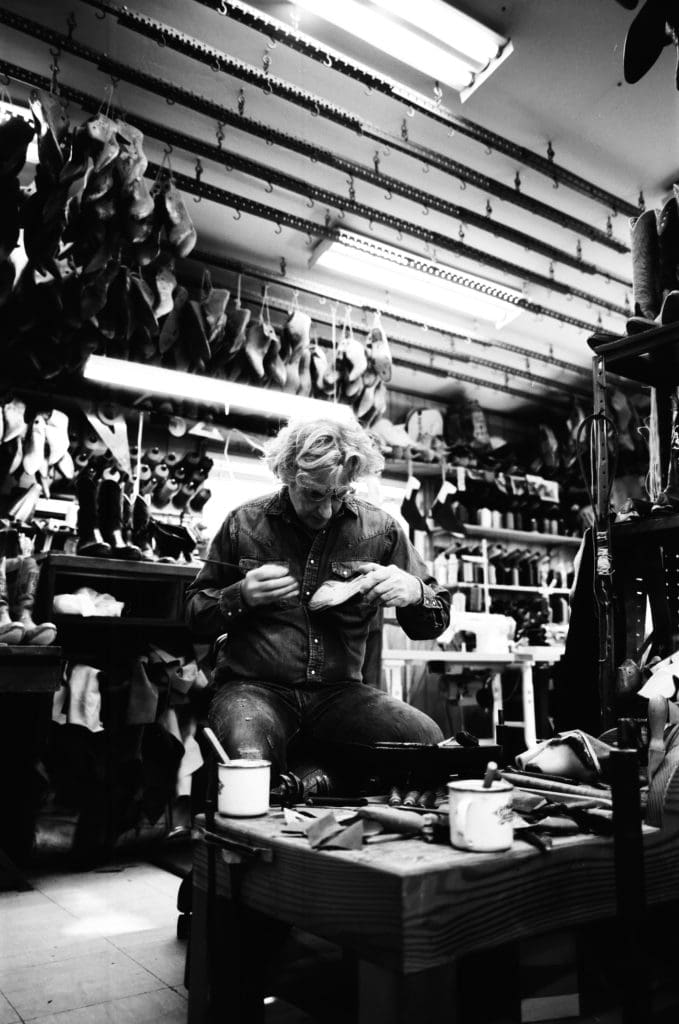
At the same time, I’ve started a documentary approach to people who have dedicated their lives to a craft practiced with passion and repetition. In this context, I met Lee Miller, one of the last artisans in Austin, Texas, still making boots by hand using traditional methods. My interest goes beyond documenting the technical gesture; it lies in building a relationship with the person: conversation, listening, and shared time become fundamental elements of the photographic act.
For me, photography happens in this encounter. The more the other person feels seen, heard, and at ease, the more honest the image becomes. My work seeks to inhabit the threshold between the documentary and the intimate, where light, time, and presence construct a silent narrative.
What did you learn (or unlearn) while working on them?
I learned to see darkroom work as an essential extension of my practice, not as a secondary technical step. Developing and enlarging in black and white became a space for editing, contemplation, and decision-making, where the image builds slowly and acquires emotional depth. I also unlearned the idea that a photograph ends at the moment of capture; I realized it is in time, pause, and process that the image fully reveals itself.
What words, ideas or emotions were going through your head?
Duality, pause, transformation, and presence. There was a constant sense of inhabiting an in-between space: between impulse and waiting, between intuition and awareness. Nostalgia also appeared, not as something fixed in the past, but as an emotion that accompanies and shapes the way I see. The idea of light as a language, time as matter, and photography as a space for listening rather than imposing was very present throughout the process.
Were there any conversations, movies, music, or books that made their way into that work?
Yes. During this process, I watched many black-and-white films, such as Bay of Angels, The Girl with the Needle and Nouvelle Vague, as well as the series Ripley. These references mainly influenced the way I study light and contrast.
Musically, I listened extensively to Charlotte Day Wilson latest work, which accompanied the process with an intimate and contemplative atmosphere.
What's been the most difficult thing you've faced recently in your creative process?
The hardest part has been accepting my own pace and sustaining the pause without guilt. In a moment of constant pressure to produce and show results, I’ve had to learn to trust a slower process, where observation, silence, and repetition are also part of the work. Understanding that creating doesn’t always mean visible progress, and that the creative process often unfolds in doubt and waiting, has been one of the greatest challenges.
What is your favorite restaurant and what do you recommend we order?
I love Asian food and eat it almost every chance I get. For a quieter dinner, one of my favorites is the shabu-shabu at Yoshimi, but I also love Yoru. For something more casual, I definitely recommend the Korean BBQ at Goguinara in Zona Rosa.
If your life were a movie this month, what would it be called and who would write the soundtrack?
It would be called Time doesn’t move; it develops. The soundtrack would be by Mica Levi.
Recommend one or more artists you follow who inspire you, and tell us what you like most about their work or their way of working.
One photographer I follow is Emily Howe. I really admire her street photography on film, her work with Leica, and the sensitivity with which she selects color, something I deeply relate to. I also follow Noah Dillon.
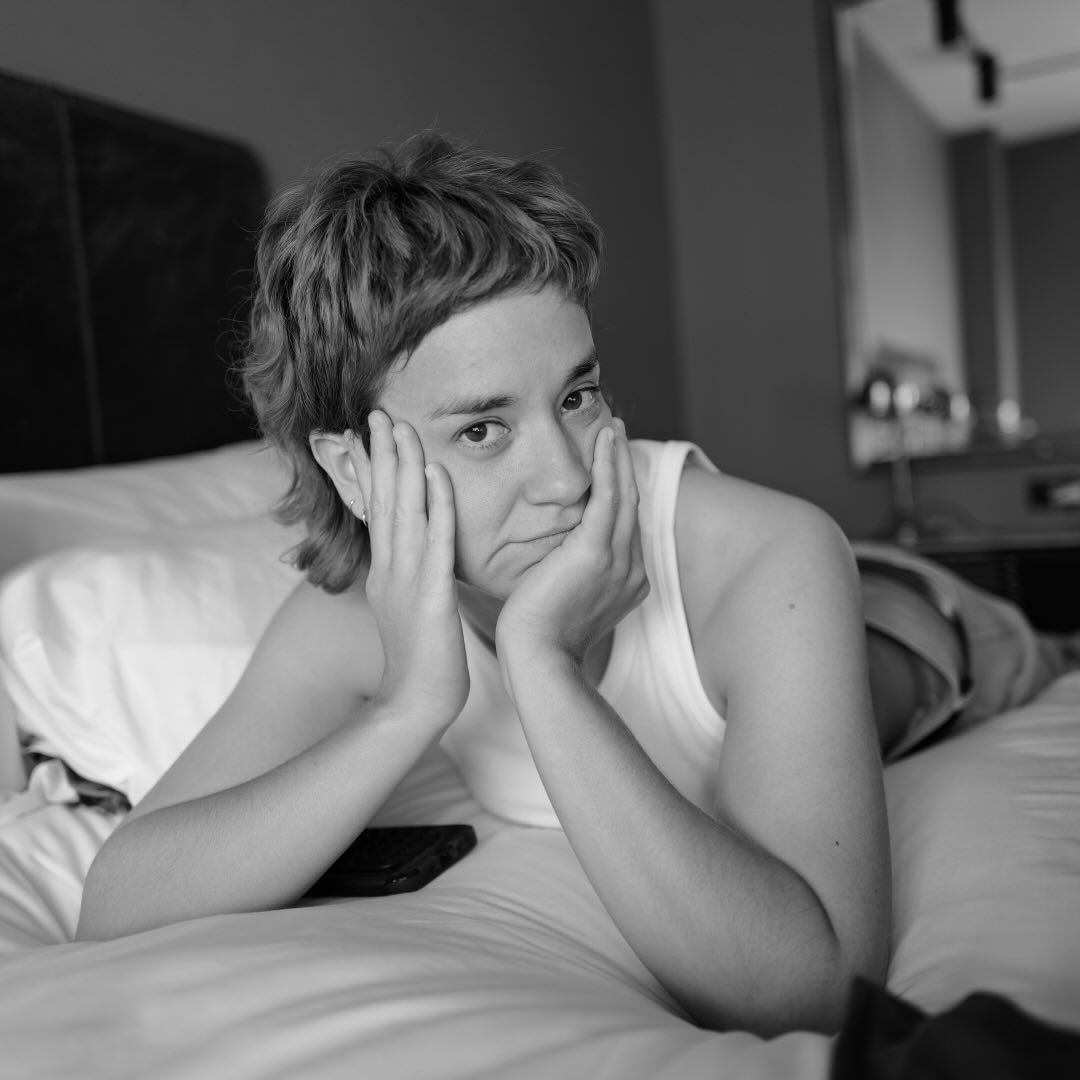
Photographer from the border between Ciudad Juárez and El Paso. Her practice is primarily in analog photography and creative direction for indie alternative artists.