How did this place come about and what made it different from the start?
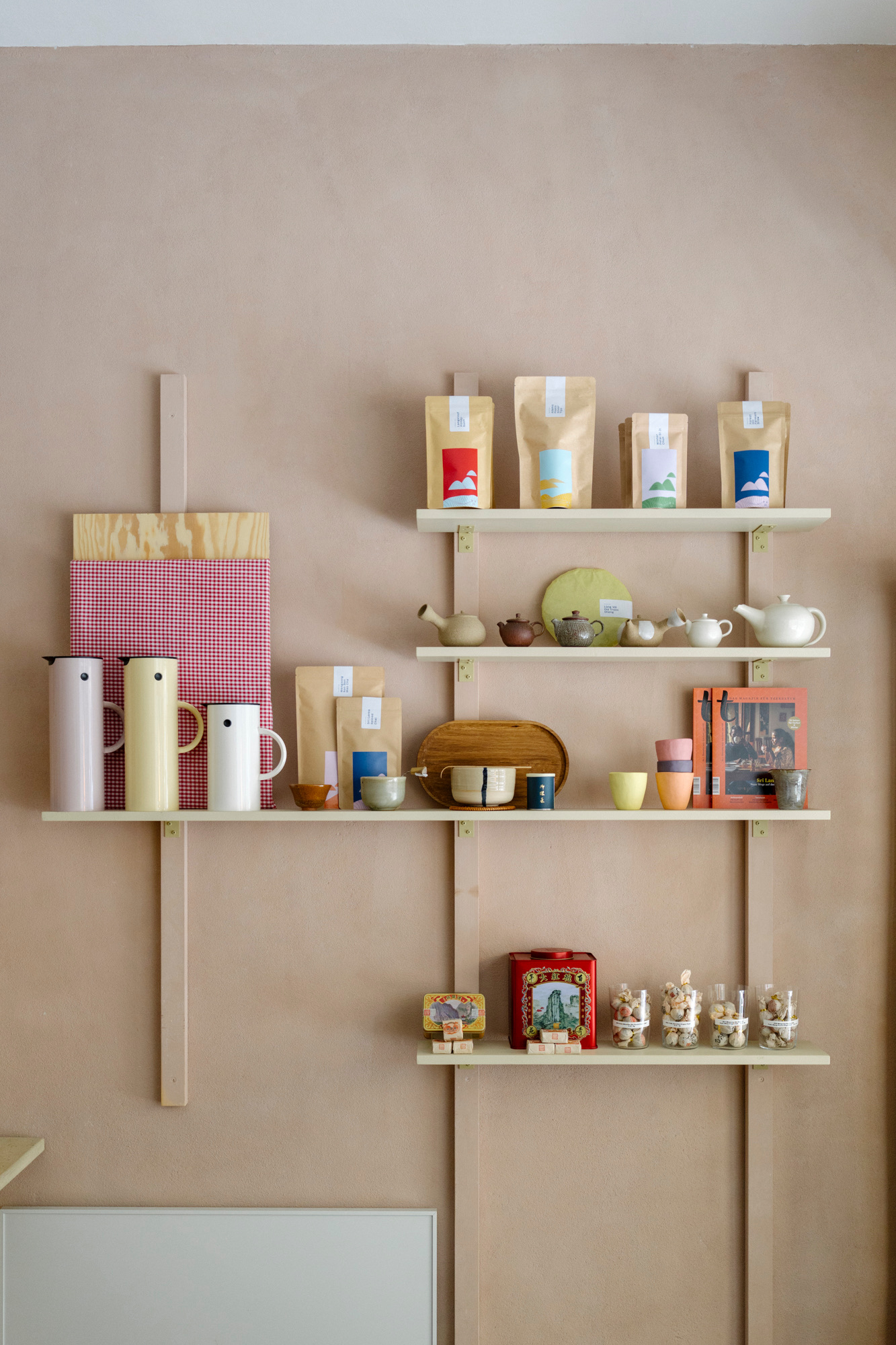
rami tea grew out of a ceramics studio. We discovered tea through the cups and pots we were making to drink it from, and realized there was room for a brand that brings unique teas directly from small gardens to Europe. Every tea has a name, a place and at least one person behind it. That was the foundation and it still is. We're a teahouse, shop and wholesale brand in Vienna's 8th district. The approach hasn't changed: find exceptional teas and share them without overcomplicating things.

What part of the day, space, or creative process do those who work here enjoy the most?
It depends on who you ask. For Angi and Kan, who work with our customers, it's the moment someone smells a tea and falls in love with it on the spot. For Teresa, who sources our teas, it's late morning when she takes a sip of something new and knows she's found something special. For me, it's the early hours with a quiet cup of black tea. Working before anyone else is awake feels like being the moon. It gives me so much energy.

If someone is coming in for the first time, what should they not miss?
Ask us to make you a cup of whatever just arrived. We always have something seasonal that won't be around for long, and tasting it here is the best way to understand what we do. If you're curious about good matcha, try ours. And take your time looking around: every tea on the shelves comes from a small farm we work with directly, and each one has a story we're happy to tell.

What has been an interesting challenge that has made you rethink something about the project?
We are four women co-founders, and all of us are mothers. That shapes the business in ways people don't always see. We understand each other's needs deeply, and we've learned to be honest about what's realistic and what isn't. It makes us stronger, but it's a constant negotiation between ambition and the reality of our lives.
The other surprise was B2B. We never expected wholesale to become so central. But serving genuinely good tea in restaurants, cafés and hotels has become one of our biggest focuses, and it's reshaped the whole project.

What influence, idea, or reference continues to shape the way you work today?
A few references keep coming back. The Teekampagne in Berlin showed that you can radically simplify a supply chain, cut out every middleman, and still deliver premium quality at a fair price. The Coffee Collective in Copenhagen proved that full transparency and direct trade can be both principled and commercially successful. And THIRST, an NGO working to reform the tea trade, reminds us why this matters beyond business. They each confirmed something we felt early on: that doing things the right way isn't the slower path, it's the only one that holds up long-term.

What place, project, or person has inspired you recently and why?
Visiting the Nengancha tea garden in Gifu, Japan. Aleš and Sachi Gallas took over a neglected garden in a remote village that has been producing tea for over 400 years and revived it entirely without chemicals. Now the impact is reaching the whole community: a grandmother in the village has started cooking for visitors, a guesthouse is opening soon, and more people are discovering the area because of the tea. Seeing what one garden can set in motion puts everything we do into perspective.

If your space could invite someone to collaborate for a day, who would it be and what would you do together?
Niki de Saint Phalle. Her work is so bold and colourful that people sometimes miss what's underneath. She made art out of pain, out of survival, and turned it into something monumental. I'd want us to design a teahouse together. Spend the day drinking tea, talking about philosophy, and ending up with something vivid and fearless and entirely its own.

Is there an object, corner or detail of the place that has a story that few people know?
When we moved in, we removed the false ceiling in the back and found a beautiful old wooden one hidden above it. Now our workspace has this dark, low, timber-clad quality. The planks are rough and close, the light drops. It feels like working below deck on a silent vessel, somewhere between a storage hold and a captain's quarters. You're back there packing tea, and it's the calmest part of the day.

If this project were a city, a book, or a record, which would it be and why?
"This Must Be the Place" by Talking Heads. The song is about home not being a fixed point on a map, but something you build with the people around you. Only one of the four of us is originally from Vienna, and yet we all chose to come back here and build this together. We've made each other our family. This project is part of who we are, and sharing that with people is really what rami tea is about.
Answers by Anouk Siedler, rami tea & rami ceramics Co-Founder.

Specialty tea for gastronomy & daily drinking
Lerchenfelder Straße, 94-95/5
Vienna, Austria