How did this place come about and what made it different from the start?
MOMO was born from something very simple: realizing that specialty coffee had become distant for many people, and that the market was centered around coffee itself, not the people drinking it. It’s full of technical terms, rules, and a certain rigidity. We wanted the opposite: to go back to the origin, to what really matters when you drink coffee.

What part of the day, space, or creative process do those who work here enjoy the most?
We enjoy building every space with intention. Each shop responds to its context and the people who visit it, while maintaining a clear foundation of what MOMO is. We design every place with attention to every detail. From the colors to the materials, everything begins with one question: what kind of moment do we want someone to experience here? That balance between consistency and adaptation is what we enjoy most about the process.

If someone is coming in for the first time, what should they not miss?
The art. At Jardín del Arte Sullivan, the space is designed as an extension of what happens outside. We worked with Iván Mayorquín,, illustrator and part of our community, to create pieces that portray the daily ritual of going out for coffee. You see MOMO, the little dog, and other characters who seem to have just passed through the space. It feels everyday, but also special. A reminder that this small habit can become much more.
What has been an interesting challenge that has made you rethink something about the project?
Making specialty coffee accessible without compromising anything. Neither the quality of the product nor the working conditions of the team. We aim to build spaces where anyone feels welcome. It’s a complex balance that requires making decisions every single day: how to maintain a high standard while still feeling approachable. But it’s part of what we believe in: that coffee can be good, fair, and approachable at the same time.

What influence, idea, or reference continues to shape the way you work today?
More than a specific reference, what guides us is an idea: taking the pressure out of coffee. Returning to what’s essential, to what happens around a cup; to the people drinking it, their routines, their pauses, that moment they carve out for themselves in the middle of the day. You shouldn’t need to know about coffee to enjoy it. You shouldn’t feel out of place. Just arrive, order something you like, and give yourself that moment.
What place, project, or person has inspired you recently and why?
There are two projects we really admire: Buna and Baldío. We know them closely and have seen how they operate. Both demonstrate something important: that a business can be profitable while also being responsible toward the product, the environment, and the people involved. That pushes us to question ourselves and keep improving.
If your space could invite someone to collaborate for a day, who would it be and what would you do together?
We would love to invite Mau, by Apapacho Comunidad de Café in Querétaro. We really admire the way they approach coffee: very thoughtful, but also very approachable. It would be a day behind the bar, preparing filter coffee and talking with people. A simple day, but very aligned with what we believe in.

Is there an object, corner or detail of the place that has a story that few people know?
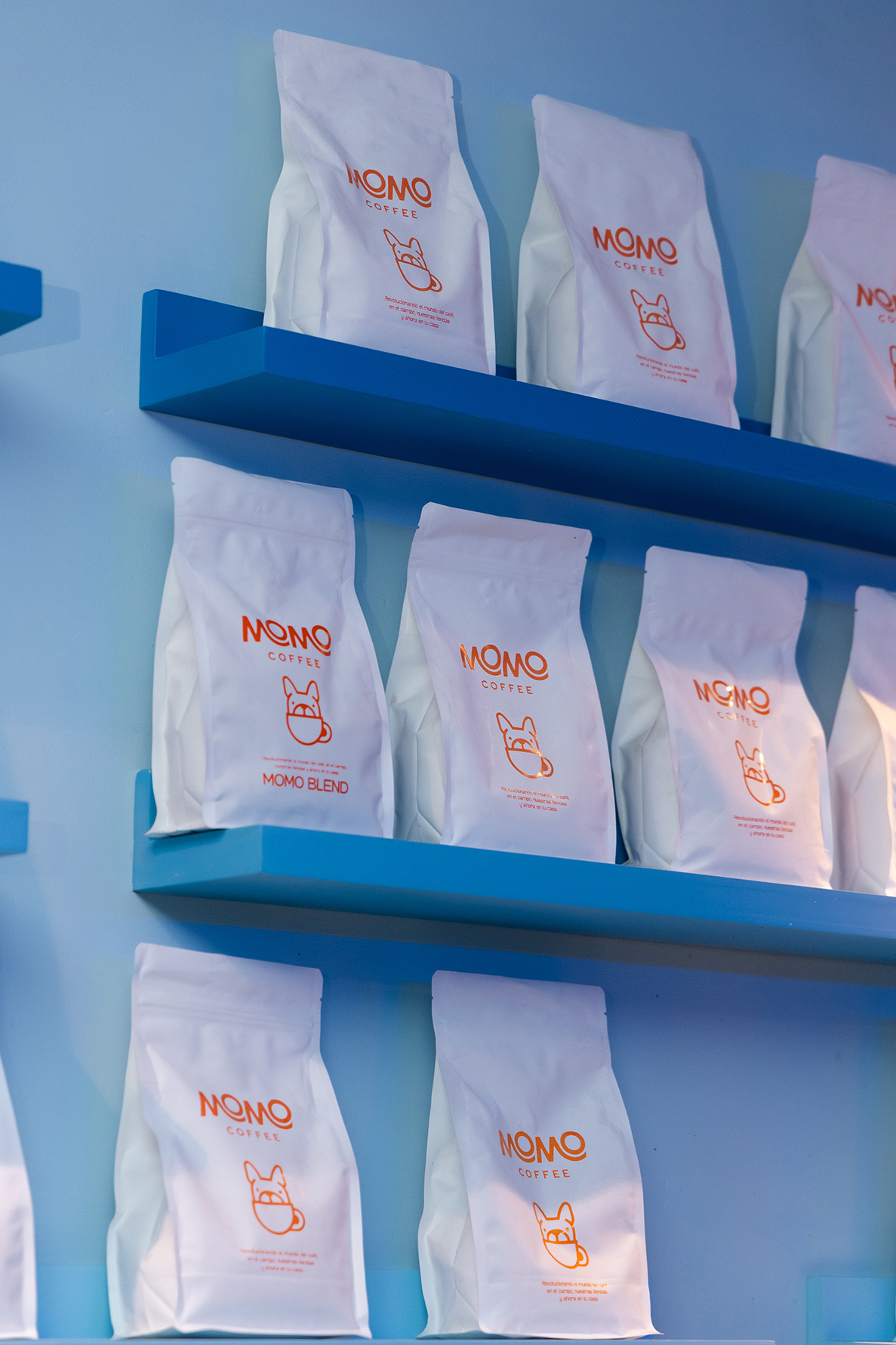
MOMO actually exists! She’s a real dog. She’s five and a half years old and female, although many people think she’s male. At first, the chain’s name was only temporary, a placeholder while we figured out the brand. But it started to stick. People remembered it, said it affectionately, made it their own. And we realized MOMO already had something important: its own story.
If this project were a city, a book, or a record, which would it be and why?
Berlin. Because of its relationship with music, art, and creative freedom. It’s a city where many forms of expression coexist without trying to fit into a single mold. That’s also what we aim to build with MOMO.
