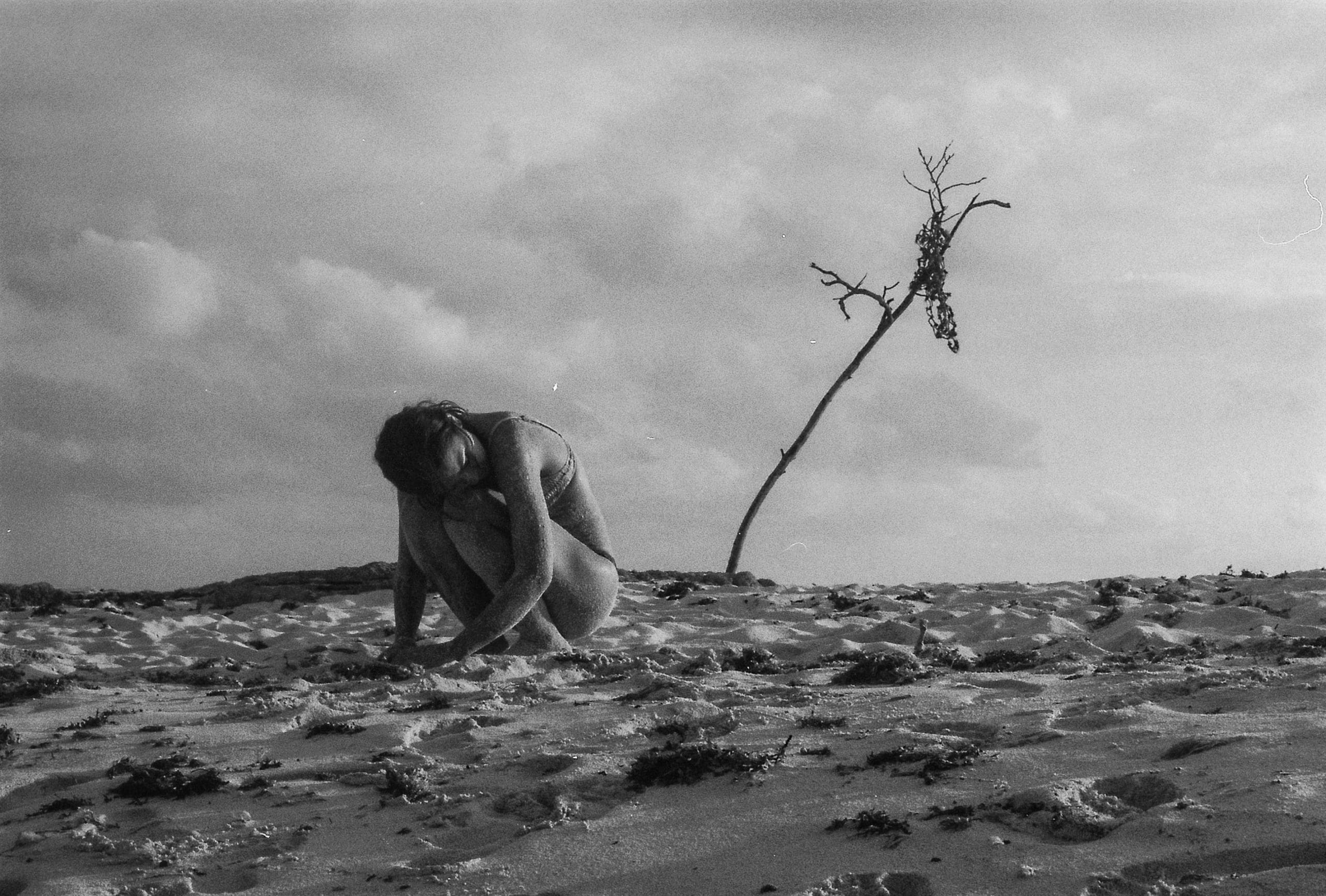
So you’re the one who lives right next door, are you?
Ah, I figured you did— no wonder I hadn’t seen you around in a while.
I think of the last time I saw her. That time she struck me as deeply frightened. As if the fear I caught in her eyes were something like an illness, something that could rub off on you. I remember her hands. Bloodless and trembling. That steady, almost mechanical motion as she slipped the beads of her rosary through her fingers, like letting go of seeds that never came to sprout.
Can you believe it? My grandchildren died. They were riding with their mama and they crashed. Oh no, my God. My children already died, but it hurts because my grandchildren still had so much living left in them.
I try to imagine what it must be like. Entering death. What it felt like to loosen oneself from life. I always think from the place of feeling. For a moment I feel humbled by that absence, and suddenly it seems to me that going on would be nothing more than an unending entering into death. Something like dying a hundred times before really dying. And that last death —just that— would wipe all the others away.
I take walks around here when I feel sad, and watching TV doesn’t help me. My boy Manuel, how he loved having us watch TV with him. Those cartoons he liked so much—I can’t even look at them anymore. How something so innocent can turn on you all of a sudden, in memory, like a puddle of mud, you see.
I was never really close to her, nor did I feel any particular affection. And yet her leaving has shaken me deeply. I’ve even imagined myself, among a crowd, crying for her. An act that, to me, seems no greater than the per se, yet perhaps greater than having felt nothing at all. That thought consoles me. After all, I think, maybe I’m not so far from understanding. And in that closeness I sense, I glimpse a dreamlike possibility: entering death together. Maybe, someday, dying with company
The other day I tried to cross the street so they’d run me over, and they stopped—would you believe it? I ask God’s forgiveness for going against His will, because God has been real good to me. He healed my sickness. But sometimes it’s hard for a person to believe things happen for a reason.
So it occurs to me that what I’ve felt —what’s been stirring me up inside— has something to do with the change her departure brings. Because she, like the familiar face she was, like that voice that every December led the rosaries in other people’s novenas, or the smell of a candle just snuffed out, now fading away—she too is a symbol of other times. Despite repeated efforts, I’m unable to summon what she might have felt, or even thought, upon entering death. There is no empathy. Only fear.
Photography by Nicholas Dominguez Gallegos.

Born in Campeche in 2001, he resides in Mérida. From a young age, he found in art a way to dialogue with the world. His work explores time and narration as means of capturing what is essential to the human condition, especially through photography and the written word.