What pieces or projects have you been working on lately?
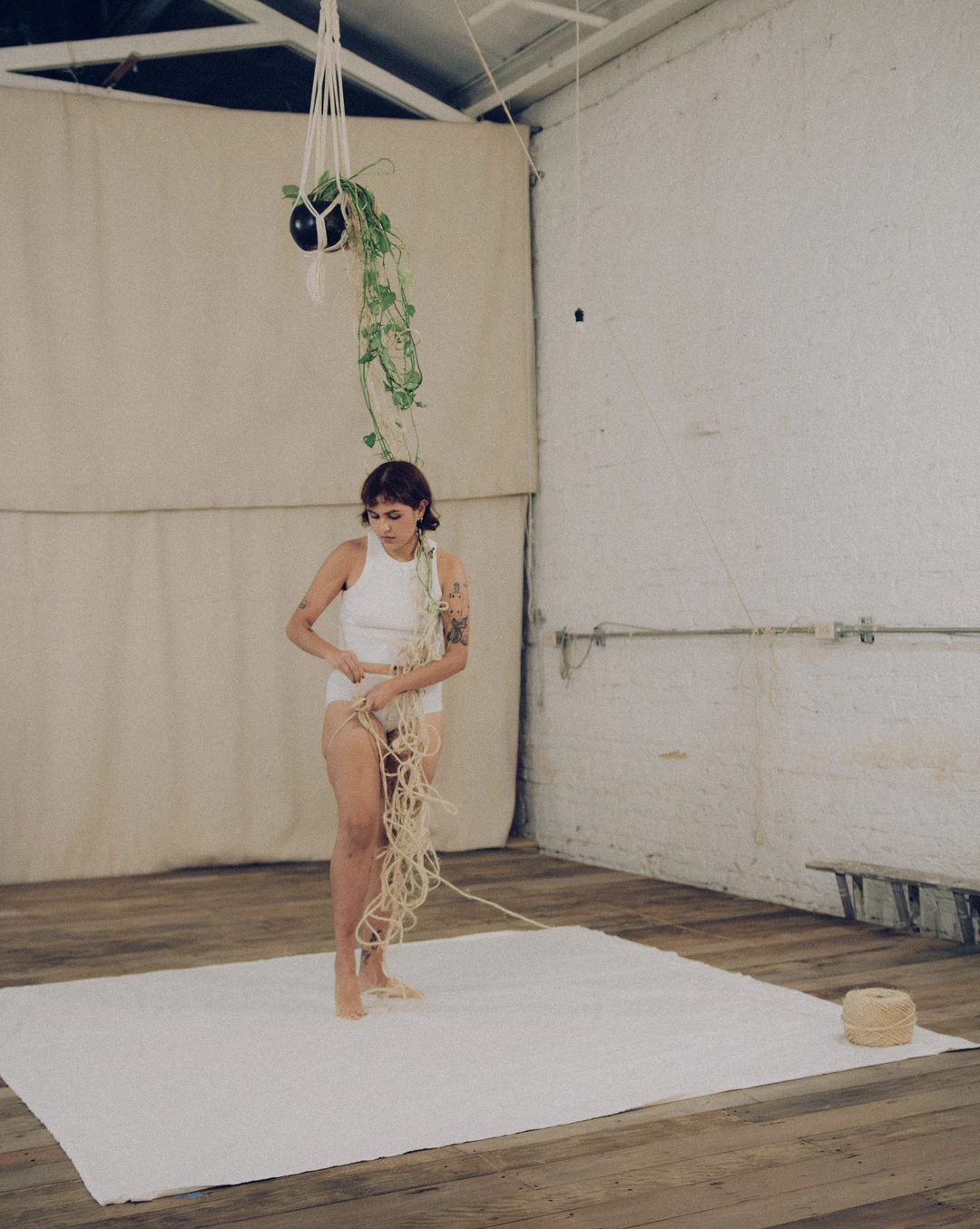
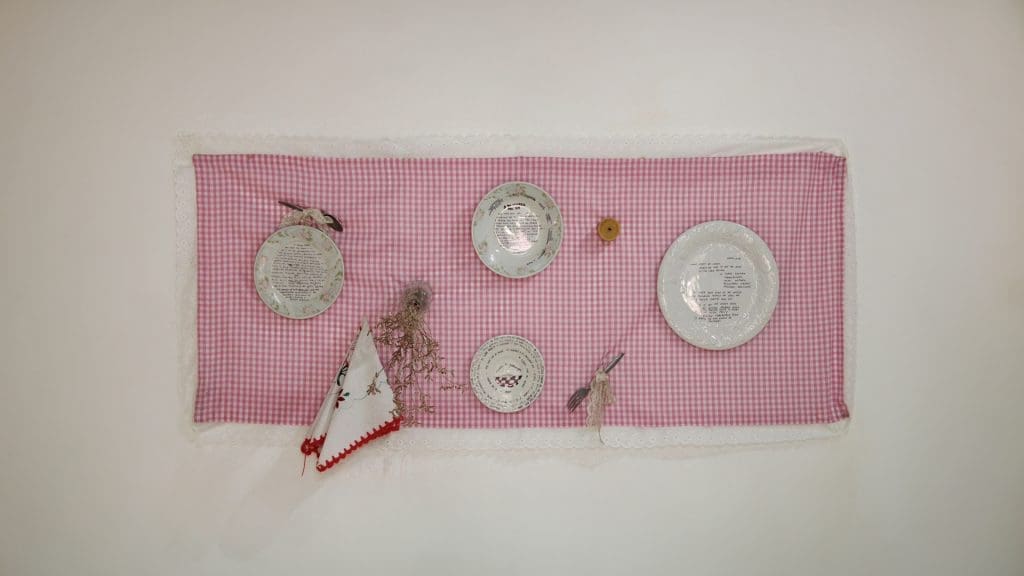
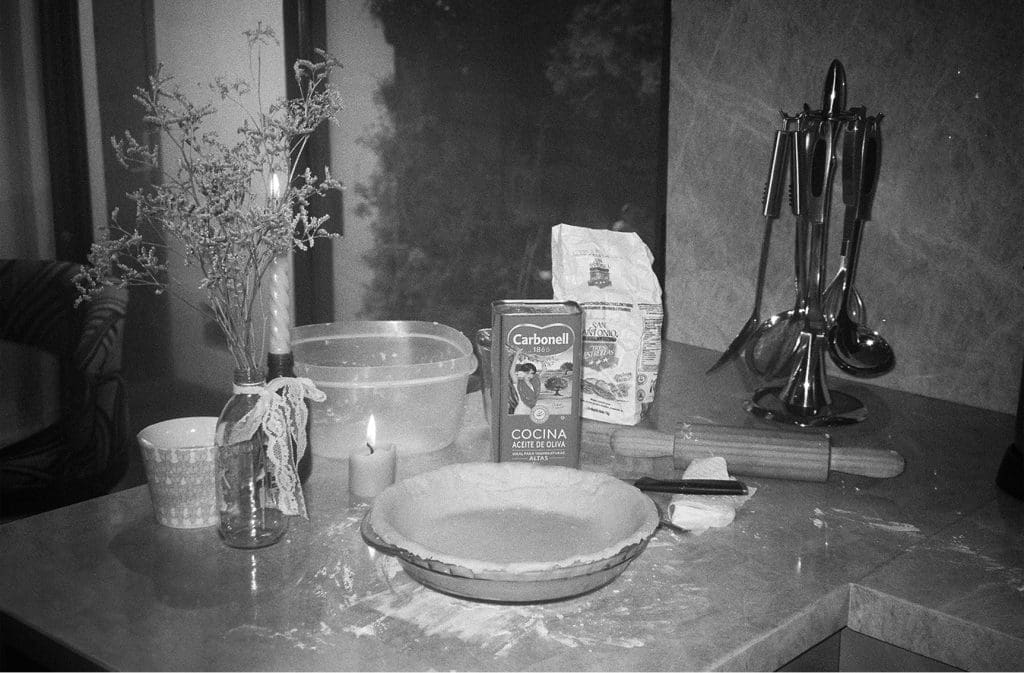
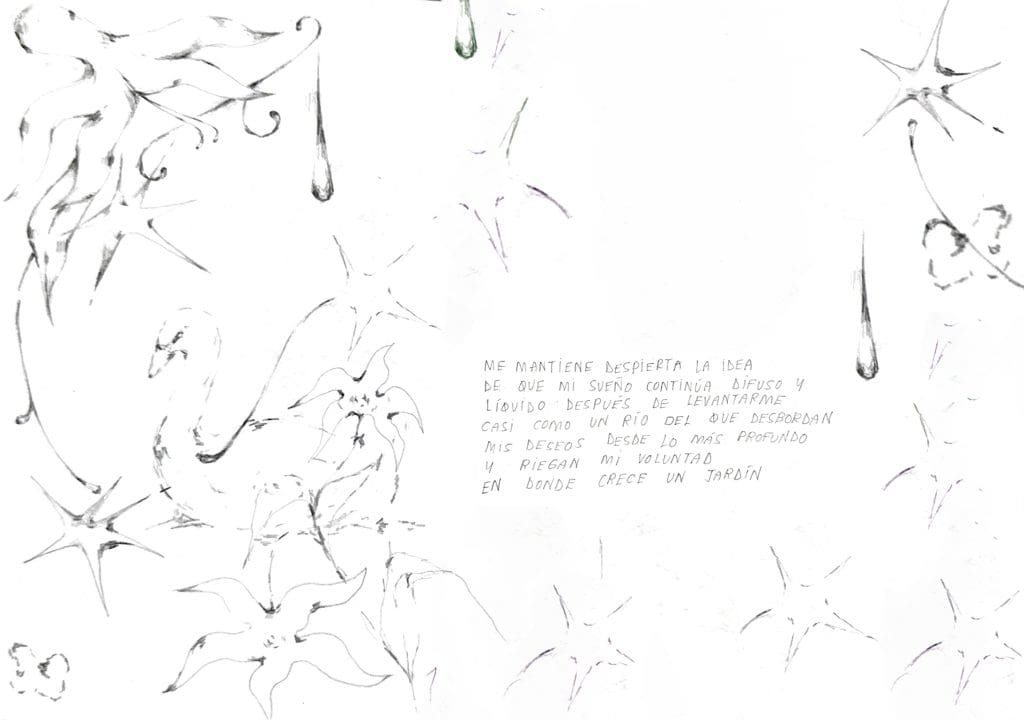
I had the opportunity to exhibit my work in several spaces during the art weekend in Guadalajara. Among them, I produced my most recent piece, Imagino un jardín en el terreno baldío camino a casa, for the selection of Otro Espacio GDL at Temporal, which took place at the former Convent of Santa Teresa. Also, Jardín Estudio invited me to create a work titled a body made of lace and light, which was part of her collective exhibition I suppose I should start by saying that I've fallen in love with a color at Rayón 375 and at MUPAG, as part of the program they designed to commemorate International Cyanotype Day. Finally, I was able to exhibit my series of pieces again. Materia muerta: A lo que fui at Estallido Art Project, a new exhibition space in the city center managed by Yuriko Cortés and Pablo H. Cobian, which allowed me to reconnect with these pieces and see them in dialogue with other works in their collective exhibition Pink Crystal Swans.
What did you learn (or unlearn) while working on them?
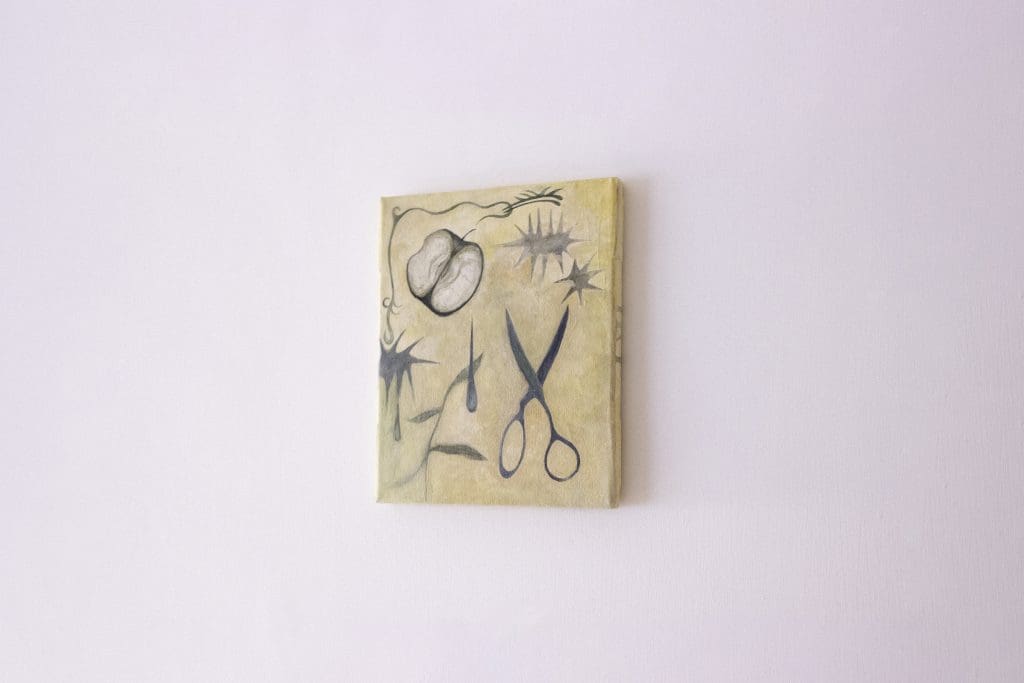
When producing Imagino un jardín en el terreno baldío camino a casa, I decided to return to painting as my medium, this time with the intention of unlearning the formal methods that had led me to the technique, thus allowing myself to find my own style. In this era of technical reproduction, it is a challenge to try to do something truly different, when the construction of images feeds on all the visuals we consume daily. Many contemporary critics claim that no one creates anything original anymore; however, I understood that proposing something not necessarily new can also be meaningful. With this piece, I learned to construct my own images from direct observation: I went out to look at the world beyond the digital realm and to imagine the possible landscapes behind those fenced-off vacant lots I encounter every day while walking through the city. From the act of dreaming, I found my own way of illustrating.
What words, ideas or emotions were going through your head?
Landscape, garden, territory, reverie, city, rest, longing, pause, journeys.
Were there any conversations, movies, music, or books that made their way into that work?
While working on this piece, I read some things that made me think about how we inhabit the city and what we imagine when we walk through it. During these walks, I imagined the need for gardens in the city as spaces for pause and rest from the accelerated pace of productivity to which we are subjected daily. To propose this utopian vision as a possible space within the impossible, Gaston Bachelard, in La poética del espacio, speaks of how imagined places can be just as habitable as real ones, because they open up dreamlike territories within us. That idea made me think that imagining is also a way of inhabiting. I was also deeply moved by what Henri Lefebvre proposes in El derecho a la ciudad: to inhabit is not only to have a place to be, but to participate in the creation of shared spaces. Thinking of the garden as an act of symbolic appropriation was, for me, a way to make fertile the space that the city has left empty for commercial purposes, to sow something—even if imaginary—in the midst of that which seems lost or inaccessible.
What's been the most difficult thing you've faced recently in your creative process?
The most difficult thing I've faced lately in my creative process has been trusting my work and the career I'm building. It's a shaky process, in which I often question my path, especially because no one tells you from the beginning where to find the necessary opportunities; little by little, you build your own route and discover these spaces. Professionalizing work within the art scene is complicated: I find myself in a field that, for many of us who try to make a living from it, remains uncertain and poorly understood, and sustaining the practice means taking it seriously, because if I don't, no one else will; doing it professionally and giving it the value it deserves from my own artistic practice. I consider myself fortunate to be able to continue producing, but I also want to be honest: it's not yet possible for me to live entirely off my artistic work. Living in this reality has taught me that my growth within this environment is a slow process, full of learning and small successes, and I am in that transition between sustaining my practice and building the conditions that, over time, will allow me to dedicate myself fully to it.
What is your favorite restaurant and what do you recommend we order?
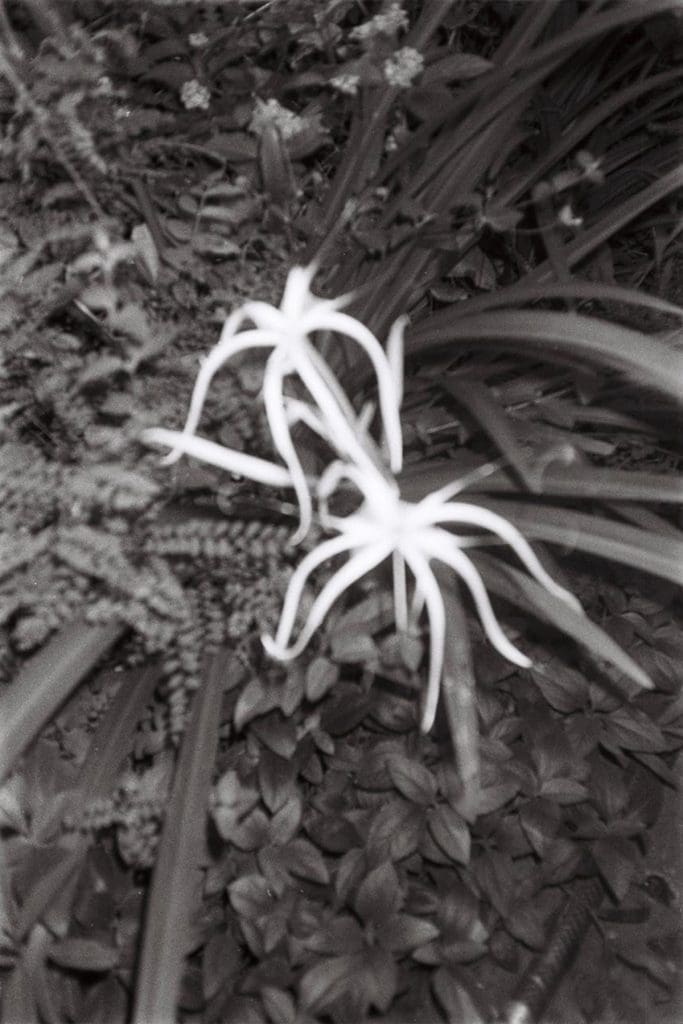
Here in Guadalajara, I really love going to Gabinete. It has something that's very personal to me: this 'vintage' vibe because it's full of old furniture and objects that look like they were found at flea markets or rescued from some forgotten relative. Whenever I go, I order their tomato soup or the fried cucumber wrap, and I always have it with a lavender kombucha.
If your life were a movie this month, what would it be called and who would write the soundtrack?
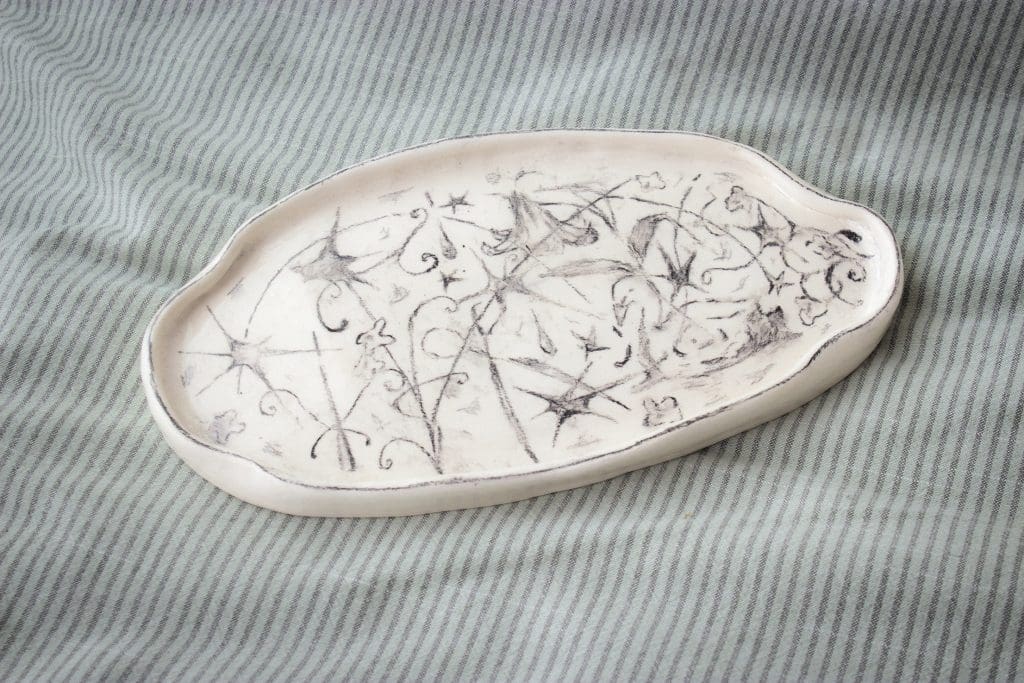
I would call it “Watering my garden of wills” and Mabe Fratti would probably be the one to provide the soundtrack for this chapter of my life.
Recommend one or more artists you follow who inspire you, and tell us what you like most about their work or their way of working.
Fernanda Leaño, through ornament and poetry, she questions the limits of language and how this influences our way of imagining/thinking.
José Téllez uses the self-referential and personal as a document and archive, allowing us to connect with our own intimacy through his work.
Priscila Santos maintains a beautiful dialogue with nature and her surroundings, investigating in her own way the number of species she portrays through cyanotype.
Lucía Gallipoli maintains a personal, raw, honest, and sensitive approach, using sewing as a deeply characteristic medium of her voice.
Marian Roma has a skill and a number of techniques for manipulating objects.
Isabel Huerta has an illustration style in which I see myself reflected through the scenarios in which she appears and connects situations/contexts of a feminine and personal nature.
Isa Magdaleno reflects her mythology and personal character in her work with visual images and discourses in which I find quite a similarity with my work, so it's like having an eternal conversation while simultaneously creating each one from their own work.
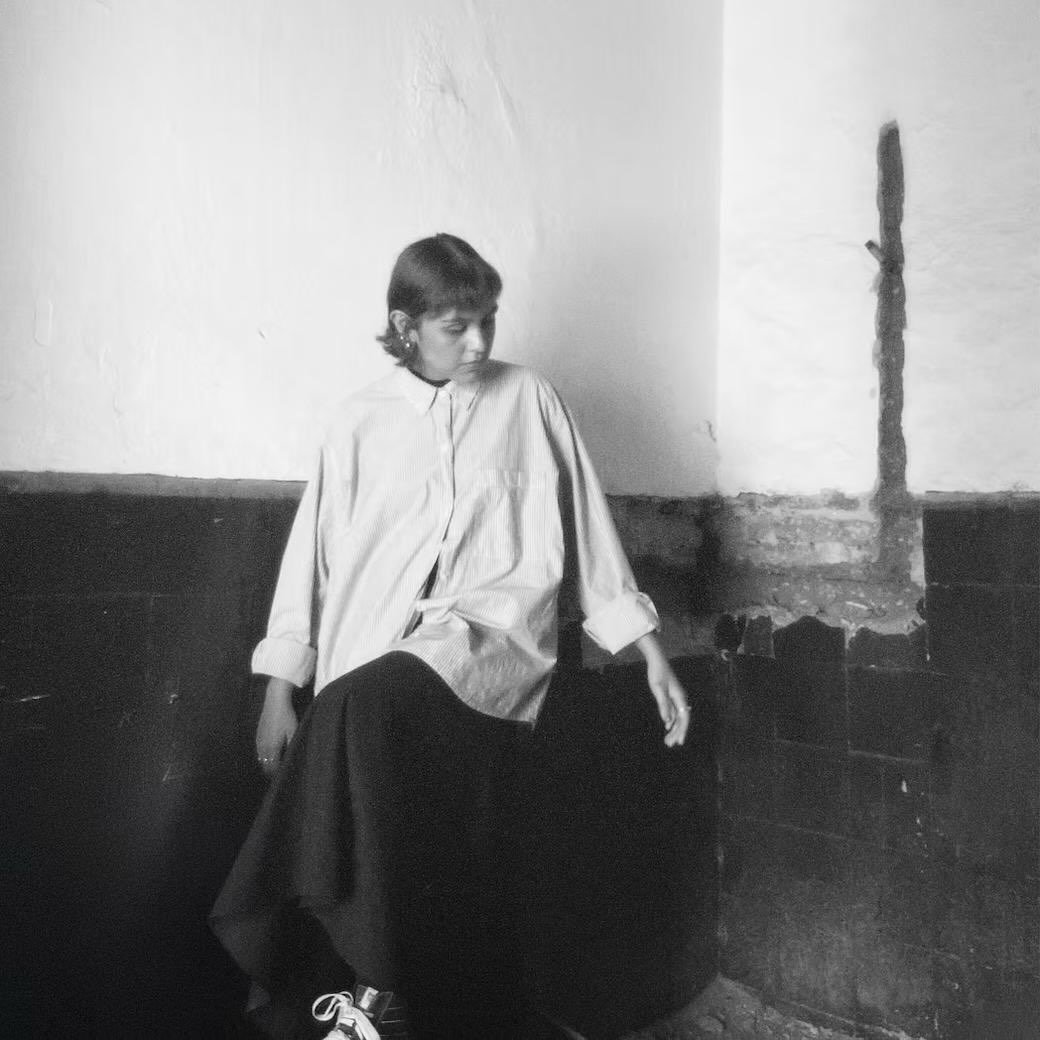
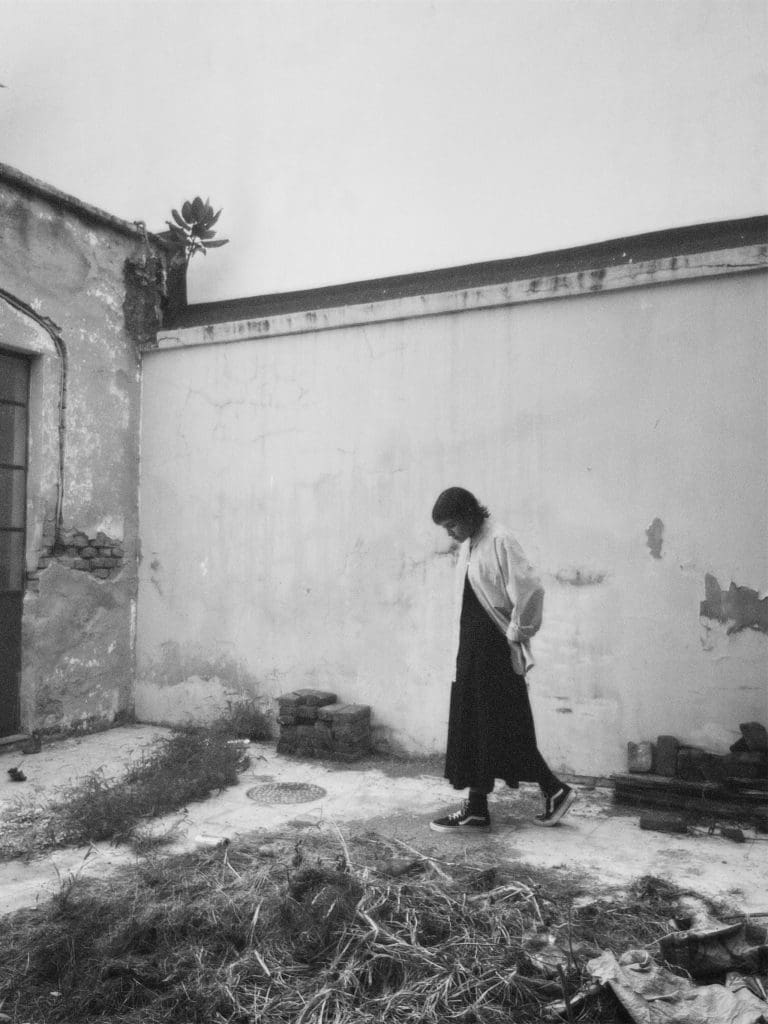
Artistic project of the multidisciplinary artist Natalia Ramírez (2000), who under this pseudonym explores human identity as a constantly transforming process, traversed by the fragmentation of being, the acceleration in the contemporary and material era.