How did this place come about and what made it different from the start?
I learned film developing in 2020. At that time, labs weren't accepting rolls of film due to the pandemic, and it was a good opportunity to learn. I started by developing C-41 and soon moved on to black and white. Pedro and I were working on projects very different from the laboratory, but we were both interested in exploring analog possibilities; that's how we started to imagine Aboriginal.


The shop opened in April 2024. We had started the project from home in 2023, a year earlier, receiving rolls in mailboxes and by courier for those outside Monterrey. But we always felt the need for our own space for the project, so we began looking for a place. We wanted it to be downtown; we've always loved the La Purísima area, and we found our spot very close by. We love having the opportunity to share our passion and this space with the people who visit us.

What part of the day, space, or creative process do those who work here enjoy the most?
I think we're very much about processes, from the moment the film arrives at the lab, talking with the clients, developing the film and making sure the negatives are properly exposed and contain all the information, right up to the moment we scan and clean the images. What we value most in the lab is being part of the process, being able to be part of the journey of our clients' images. Images always have personal emotional value and are very important to the people who send us or leave their film directly at the lab, and being able to be a part of that and seeing our clients satisfied with the result is one of the things we enjoy most.


If someone is coming in for the first time, what should they not miss?
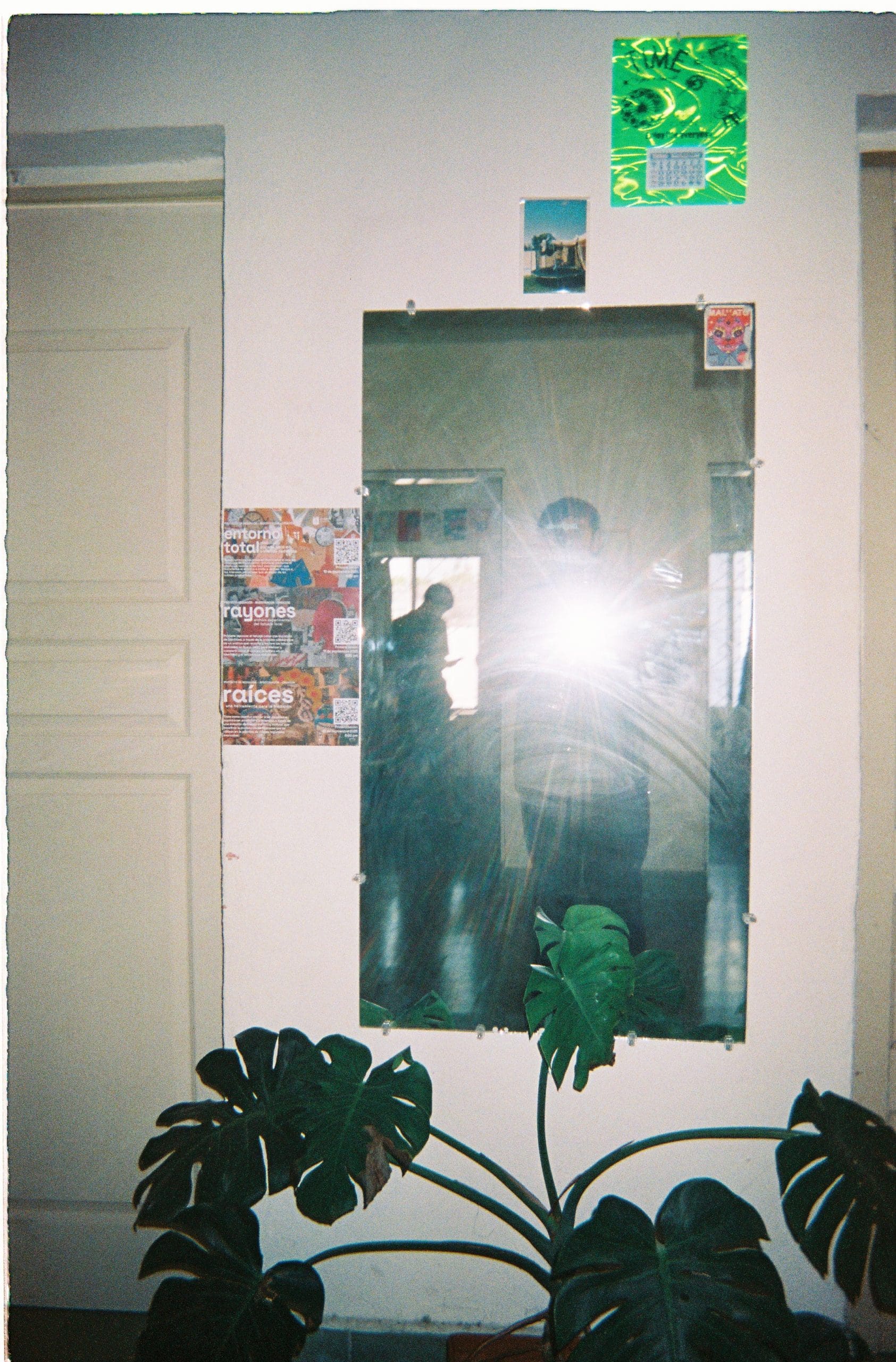
At Aborigen, we have a small space that's slowly being transformed into a studio. In the afternoons, it's bathed in sunlight, making it an incredible spot for photography. If you visit us after 5 pm and bring a camera with film, don't miss the chance to take a picture there :)

What has been an interesting challenge that has made you rethink something about the project?
I think the project has already gone through several transitions. The most significant rethink came when we decided to have our own space, a space dedicated to our project. Taking it out of the house—bringing it outside—was a crucial step that we believe changed a lot in how we approach the lab. The connection with clients and visitors shifted; the interactions and moments created in the space helped us approach it from a different perspective.


What influence, idea, or reference continues to shape the way you work today?
The idea is to always offer the best possible service and continue improving in the process. Laboratory processes are something we're both passionate about, and over time we've learned about timing, chemistry, scanners, and other technical aspects. But we've also learned about the community that forms around photography—a large and ever-growing community of people eager to learn. We both enjoy talking with people, answering questions about topics we know, and being a part of it.

What place, project, or person has inspired you recently and why?
There are many projects that inspire us a lot, from laboratories and galleries to cultural spaces. I can mention some that, through their work or aesthetics, have inspired us greatly, and above all, they form a community, which is one of the things that interests us most. In Monterrey, there are some projects whose approach to interacting with visitors we admire. Pareidolia, Uncultured, El Dorado and the other laboratories here, which are part of an important effort. We also draw many inspirations from other places, such as ChinoLibros in Mexico City, Carmencita in Spain, Analogue in the Netherlands, Thefindlab in the United States, among many other projects that inspire us.

If your space could invite someone to collaborate for a day, who would it be and what would you do together?
If I'm optimistic, I'd love to do a photo exhibition with Sakiko Nomura, she is one of my favorite photographers, and being able to be part of an exhibition in collaboration with her, in the lab, with the people who visit us and in my city is just an idea that I would like to happen.

Is there an object, corner or detail of the place that has a story that few people know?
Perhaps some people know, but all the drawings of Aborigen and his characters were made by him Joel, one of our best friends. Since the project began, he's helped us create these images, and several of his drawings are framed and hanging on the walls of the lab. Many people stop in front of them to look at them and read what they say; it's lovely to have them in the lab and see people laugh at what they read in the drawings.

If this project were a city, a book, or a record, which would it be and why?
Many times at Aborigen I've listened to Long Season by Fishmans, I like to think that if the project were an album, it would be that one. I like the relaxed vibe of the space, and in a way, I think they relate to each other and easily coexist in the same place.
Answers by Fernando Estradas, co-founder of Aboriginal Film Lab.

Analog photography lab
15 de mayo 1022, Centro
Monterrey, Nuevo Leon, Mexico