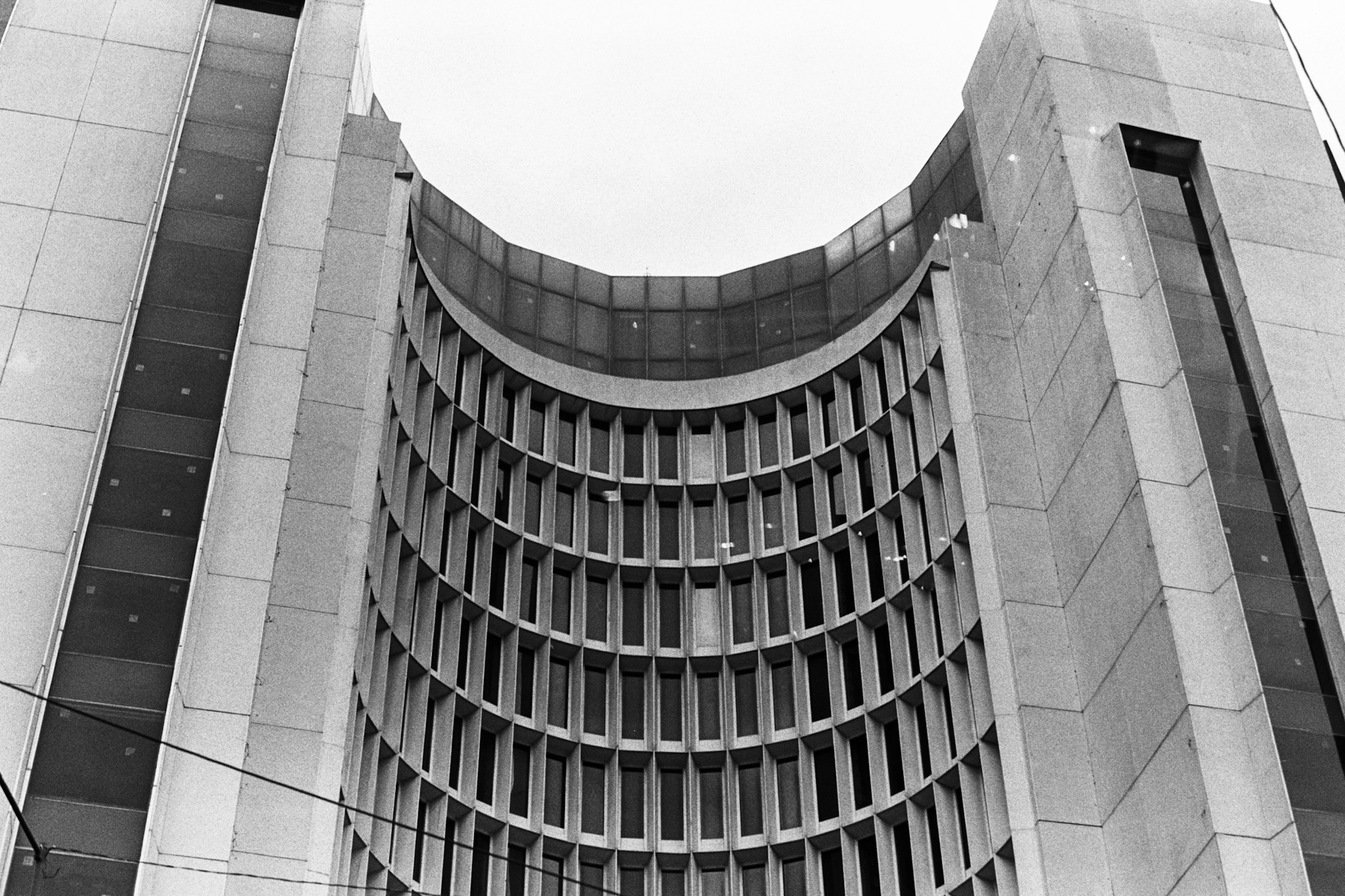
In this city, everything seems predictable. People walk everywhere as if life came with an instruction manual.
Everything is chosen from a catalog: lovers, friends, restaurants, jobs, music. There are apps that tell you who you could be happy with, others that tell you what food you like before you even try it, and still others that tell you what perfume to wear without you even smelling it. There are also coaches out there selling spells to manifest abundance and make healthy financial decisions while you do sit-ups. However, behind this choreography of control, chance, with its tiny smile, is waiting for you to slip up so it can turn your life upside down.
Barry Schwartz, in his book The paradox of choice, said that having hundreds of options doesn't liberate you; on the contrary, it overwhelms you. Schwartz argues that there is a contemporary paradox: the more options we have, the more lost and insecure we become.
He tells us that the supposed freedom that apparently lies in being able to choose between 20 types of shampoo, 32 suitors, 100 exercises to grow your triceps, and 2,500 movies (all excellent), is actually a recipe for anxiety, remorse, and worse still: a recipe for choosing nothing at all, and if you do choose, for perpetually regretting it, thinking, "We could have chosen better." Did I choose the right job, my partner, my Sunday sandwich, the flavor of my ice cream?
The illusion that more options equals more freedom is a mirage; in reality, it has us trapped, calculating every decision as if our happiness depended on an abacus.
For his part, Nassim Taleb, with his book The black swan, presents us with a very interesting theory: what truly matters is chance, accidents, reunions, everything that you could in no way predict.
He talks about that blow that hits you without warning and throws you off balance, something you never saw coming, but that changed your life completely. Taleb says that most of the events that truly determine our lives, such as death, unexpected encounters, unforeseen layoffs, hidden illnesses, and economic crises, are unpredictable, rare, and have a brutal impact.
The problem is that most of the models, algorithms, options, and plans we believe to be infallible are useless when faced with the events that truly impact our lives. It's like thinking you have Mexico City under control because you know the traffic schedules, and then suddenly a horde of protesters reminds you that control is a myth and that life, with its mocking smile, always finds a way to put you in your place with a single, well-aimed blow.
By your early twenties, you should have clarity of vision, money, a six-pack, goals, and a couple of astrological numbers tattooed on you. By thirty, you should have a stable partner, health insurance, and a child with a name straight out of a Spanish novel. By forty, you should be perpetuating all of this, eating two radishes a day, and maintaining your six-pack.
The problem is that these social choreographies vanish in the face of truth. The world moves in fits and starts, in leaps and bounds, in collapses. The real stories are written when something goes wrong, when you make a mistake, when someone leaves without warning, when life comes crashing down on you like a poorly hung awning. They are the cisnes negros Taleb's ideas are about those events that no one anticipates and that, without asking permission, redefine you.
Love, work, stability, and even those "traditional values" sold to us as a compass pointing to heaven, are merely an attempt to tame the untamable. And perhaps the only certainty possible in these times is that nothing can be calculated, and we must accept that we still have to go out and dance.
Photography by Ricardo Andreas Valerio Granados

I'm a lawyer by sheer bad luck. The law puts food on my table, though sometimes I suspect it also gives me gastritis.